

See how the TV format carries into the casino game, and what to check when exploring free play, bonuses and account requirements.
From the TV Show to the Casino Game
The television format of Deal or No Deal is built around a simple tension: a contestant has a briefcase, the Banker has an offer, and neither side knows whether the contestant’s case contains more or less. The cases make uncertainty visible. Each one opened narrows the possibilities, while the Banker’s offer gives the contestant a decision to weigh against the value still hidden from view.
That structure is why the title translates so readily into a casino-game setting. The central attraction is not simply opening cases; it is deciding what an offer means when the contents of the remaining cases are unknown. A casino adaptation borrows the show’s recognisable vocabulary and suspense: briefcases, a Banker, offers, and the familiar choice to deal or continue. The television premise supplies the dramatic frame before any individual game’s presentation is considered.
On the show, the game begins with 16 briefcases. The contestant selects a case, then opens others over successive stages. Three cases are opened in the first round, after which the Banker makes an offer. The live host puts the central question to the contestant: “Deal or No Deal?” The question is memorable because it compresses the whole dilemma into a choice between a known offer and an uncertain outcome.
If you’re considering a Deal or No Deal casino in the UK in 2026, payout timing is one practical detail to check. These verdicts highlight the withdrawal timeframe available for each listed operator.
1. Revery Play
Payout speed: 1-3 business days Revery Play lists payouts as taking 1–3 business days. If you choose it, use that timeframe as a guide when planning withdrawals.
2. Zombillion
Payout speed: 1-3 business days Zombillion gives a payout timeframe of 1–3 business days. That’s the available detail to consider when you’re planning a withdrawal.
3. SpinFormula
Payout speed: 1-3 business days SpinFormula lists payouts at 1–3 business days. Keep that stated timeframe in mind if you’re considering a withdrawal.
4. Jetsetspins
Payout speed: 1-3 business days Jetsetspins indicates that payouts take 1–3 business days. This gives you a stated timeframe to factor into your plans.
5. EvoSpin
Payout speed: 1-3 business days EvoSpin’s listed payout speed is 1–3 business days. If you play here, allow for that timeframe when planning withdrawals.
6. NightWin
Payout speed: 1-3 business days NightWin lists a payout timeframe of 1–3 business days. This is the available practical detail for you to weigh when considering withdrawals.
7. Chanze
Payout speed: 1-3 business days Chanze states a payout speed of 1–3 business days. You can use that timeframe as a guide when planning to withdraw.
8. Britsino
Payout speed: 1-3 business days Britsino lists payouts as taking 1–3 business days. Bear that stated timeframe in mind if you’re considering the operator.
9. WinBeast
Payout speed: 1-3 business days WinBeast gives a payout timeframe of 1–3 business days. That’s the known detail to consider when you plan a withdrawal.
10. NightLuck
Payout speed: 1-3 business days NightLuck lists payouts at 1–3 business days. If you choose it, use this timeframe to help plan withdrawals.
The Banker’s role is not to reveal what is inside the cases. The offers instead give the contestant a measure to compare with the possibility that their own case holds more. Before the final stage, contestants receive three offers from the Banker. The format therefore alternates between revealing information and asking for a decision: a case is opened, the field of possibilities changes, and an offer arrives. Suspense comes from that repeated contrast between what is known and what remains hidden.
The show’s final decision makes the premise especially clear. A contestant can accept the offer, reject it and take the prize in their own briefcase, or switch to the last unopened briefcase. These choices turn the cases into more than containers. Each represents a possible outcome, while the offer puts a definite alternative beside that uncertainty. The contestant is not asked to calculate a guaranteed result; they must decide which possibility they prefer to carry forward.
That is the television logic a casino version evokes. The Banker is an opposing presence, the cases create a sequence of reveals, and an offer becomes a point at which the player can stop or continue. The familiar question is doing useful work: it tells you that the game’s identity rests on a decision, not merely on a visual theme. The suspense is part of the format.
Fastest Payout Online Casinos in the UK: What to Check
It is still worth separating the show’s premise from assumptions about a casino product. Searches for a Deal or No Deal slot, video slot or casino game can use overlapping language, but the label alone does not explain how a particular title is presented or what its controls do. The show has contestants, a live host and a staged sequence of choices. A casino game uses the brand’s recognisable idea in a playable setting; the television experience and the casino experience are not interchangeable.
That distinction matters because the drama on television depends on the contestant’s presence and the host’s question. At home, the audience watches someone else weigh the Banker’s offer. In a casino game, the player encounters the choice directly. The familiar briefcases may make the premise immediately legible, but the emotional effect changes: there is no live audience needed to explain the decision, and the player’s own selection becomes the focus.
The format also explains why the phrase “Deal or No Deal” remains central even when the game is encountered outside the studio. It names the point of tension between certainty and possibility. An offer gives a clear alternative; continuing preserves the chance that the player’s case or briefcase is worth more, while also leaving the outcome uncertain. That is the show’s basic dramatic bargain, carried into casino presentation.
For a UK reader looking at Deal or No Deal casino games in 2026, the useful starting point is therefore the premise rather than the imagery. Briefcases and a Banker signal a game shaped around hidden contents and offers. They do not, by themselves, tell you every detail of how a specific title works. The television format explains the appeal: a choice made with incomplete information, presented as a question everyone can understand.
A neat premise. A hard choice.
Live & Specialty Games for UK Online Casinos
How the Online Game Plays
The online game has a sequence rather than a single spin-and-win outcome: you first try to qualify, then have the option to use Top Up, and finally enter the Deal or No Deal game. That distinction matters if you are looking for a Deal or No Deal slot machine game. The qualifying stage and the main game are connected, but they are not the same step.
Qualifying comes first
To qualify, all three rings must land on a gold slice. If that condition is met, you move on to the next part of the game. The condition is specific: landing on gold with fewer than all three rings does not meet the stated qualification requirement. It is worth keeping this in mind when comparing the game with a conventional online slot, where the central feature may simply be matching symbols or building a spin result. Here, the rings determine whether you reach the later stages.
Qualifying is a gateway, not the prize decision itself. Reaching it does not mean you have already accepted a Banker offer or completed the Deal or No Deal round. The sequence continues, so it helps to separate the qualification result from what happens once the suitcases are involved.
Top Up is optional
After qualifying, you may use Top Up to add to prizes before playing the Deal or No Deal game. The choice is optional: Top Up sits between qualification and the main game, rather than replacing either one. If you prefer to focus on the core suitcase decisions, you can understand the game sequence without treating Top Up as compulsory.
Keno Online Casinos in the UK: Games and How to Choose
The important point is its role. It is described as a way to add to prizes, not as a separate route around the qualification condition. Nor should the name be read as a promise that every prize will be increased or that a particular outcome is assured. Its place in the order is clear; the details of what it adds depend on the game presentation available to you.
That makes the overall structure easy to map: qualify, decide whether to use Top Up, then play the main game. A tidy sequence.
The Deal or No Deal round
In the main round, you open suitcases and the Banker makes offers as the game progresses. At each offer, the central choice is whether to accept the amount offered or continue playing. The offer creates a stopping point: accepting it ends that game, and you collect the offered amount. Continuing means you do not take that offer and proceed with the game.
The timing of the switch option is also part of the sequence. After the fourth Banker offer, you can switch suitcases. That gives you a specific point at which a switch becomes available; it is not an option to assume applies at every offer. The choice matters because the game is built around what remains unopened and whether you prefer to keep your current suitcase or change it.
A useful way to read the screen is to keep three things separate: the current offer, your decision to deal or continue, and the suitcase choice when switching is available. They are related, but they are not interchangeable. Accepting the Banker’s offer settles the game for that offered amount. Declining it leaves the game in play, while the switch option concerns which remaining suitcase you keep.
Game Sequence
Step 1: Qualifying
All three rings must land on a gold slice to move forward.
Step 2: Top Up
You may optionally use the Top Up feature to add to prizes.
Step 3: Main Game
Open suitcases and decide whether to accept the Banker’s offers or continue playing.
Step 4: The Switch
After the fourth Banker offer, you have the option to switch your suitcase.
What to expect when you play online
A Deal or No Deal online slot game therefore combines a qualification condition with a later offer-and-choice round. The words “slot machine” may suggest that every result is settled by one spin, but that is not the whole structure described here. First you need all three rings on gold; Top Up may then be used; the main game follows with suitcases, Banker offers and decisions about whether to stop or continue.
If you are planning to play a Deal or No Deal slot online, it is sensible to check the game’s own instructions before starting. That lets you see how the screens present qualification, Top Up and the main round, without assuming that another game with a similar title has identical mechanics. The decisive rule is straightforward: accepting any Banker offer ends that game and awards the amount offered. The rest of the round turns on whether you accept or keep going.
This sequence also clarifies what “play” means in this title. You do not move directly from a qualifying result to a guaranteed prize choice; you pass through the optional Top Up stage and then face the main game’s offers. The Banker’s offers arrive as suitcases are opened, and the switch becomes available after the fourth offer. Knowing where each choice sits is more useful than treating the game as one undifferentiated slot session.
Monopoly Live Casino UK: How Live Play Works
Playing Online in the UK: Licence and Account Checks
A Deal or No Deal title may be described as an online casino game, a slot or a slot machine, but the label alone does not tell you whether the site is authorised to offer it in Britain. The key check is the operator’s regulatory status. The UK Gambling Commission oversees commercial gambling in Great Britain, including online casino activity, and it is the sole regulator for that commercial market.
The Commission’s remit for remote gambling depends on who the operator serves, not where its servers or other key equipment happen to sit. A business offering remote gambling to consumers in Great Britain must hold the appropriate Commission licence even if its equipment is based elsewhere. That makes the licence relevant when you are considering an online casino, not merely when a business is physically established in the UK.
The Gambling Act 2005 provides the main statutory framework for gambling in England, Wales and Scotland. Northern Ireland has a separate legal framework, so the Act should not be treated as covering every part of the UK in the same way. For access to online casino games in Great Britain, the practical distinction is straightforward: the operator needs the relevant UK Gambling Commission authorisation to serve customers there.
What a licence covers
The Commission issues operating licences to businesses and personal licences to individuals working in specified roles within gambling operations. The operating licence is the central authorisation for a company offering gambling to customers. A personal licence applies to people whose roles fall within the relevant licensing requirements; it is not a substitute for the business’s operating licence.
Licence Check
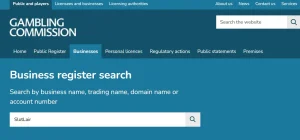
Always verify the operator on the UK Gambling Commission’s public register before depositing to ensure they hold the required operating licence.
This distinction matters because a logo or a general statement about regulation is not the same as checking the actual licence. Before depositing, look up the operator on the Commission’s public register and compare the listed business and licence details with the site you are using. The website or app should also display its licence information and link to the relevant register entry. If the business name on the register differs from the brand name you recognise, check that the relationship is clear rather than assuming they are the same entity.
A foreign address does not, by itself, remove the licensing requirement for an operator targeting consumers in Great Britain. A business may be based outside the country and still need a UK operating licence to offer remote gambling here. Conversely, a licence issued by an overseas authority is not a UK Gambling Commission licence. The relevant check is whether the operator holds the authorisation required for the market it serves.
Checks before an account can be used
Account access also involves checks that affect when you can deposit. Operators must verify a customer’s age before permitting a deposit into a gambling account. Online gambling in the UK is for adults aged 18 and over when it is provided by a UK Gambling Commission-licensed operator. Treat age verification as part of the account process, not an optional formality to complete later.
A remote operator must prompt a new customer to set a financial limit before the first deposit and make account-level limit controls accessible. These controls are intended to let you set boundaries for your own account. Read the options on the site before adding funds; the presence of a licence does not decide what limit is suitable for you.
Live Baccarat Online Casinos in the UK: How to Compare
Licensed operators must also provide responsible-gambling tools, including self-exclusion. They must offer an internal complaints process and access to an approved Alternative Dispute Resolution service. These are practical protections to note before you play: find the account tools and complaints information while you are still deciding whether to register, rather than trying to locate them only after a problem arises.
Payment rules are another part of the framework. UK-licensed casinos cannot accept credit cards for gambling, including credit-card funds routed through a money service business. They also cannot accept wallet payments where the wallet permits credit-card funds to be used for gambling. A payment method appearing on a cashier page does not override those restrictions.
If a Deal or No Deal title is supplied as an online slot, slot-specific rules may also be relevant. In Britain, autoplay is prohibited for online slots, and a game cycle must last at least 2.5 seconds before another can begin. The maximum stake per cycle is £2 for customers aged 18 to 24 and £5 for those aged 25 or older. Those limits apply to online slots; the title’s marketing label alone is not enough to establish its regulatory classification.
The useful comparison is therefore not simply between a casino game and a slot machine. Check the operator’s UK licence, the account safeguards and the rules that apply to the game’s category. A familiar title does not replace those checks.
Trying the Game for Free: What to Check
A demo is a way to explore a game without staking real money, but the words “free play” do not tell you, by themselves, whether a particular version is available or how it works. Treat the game page, rather than a search result or a promotional label, as the place to confirm what is being offered.
Trying a Demo
- Confirm the exact game title matches the briefcase format
- Verify the page explicitly offers a demo or free-play mode
- Ensure you can enter the game without making a real-money stake
- Identify whether the session is in free mode or real-money play
Start by checking the exact title. Deal or No Deal can describe a theme, a television-inspired format or a specific casino game; those are not interchangeable. If you want to try the briefcase game, look for a description that matches it. Its opening gives you a useful point of comparison: the game begins with 16 briefcases, then three are opened before the first Banker offer and Deal or No Deal decision. A page describing a different structure may not be the game you meant to find.
Then check whether the page explicitly offers a demo or other free-play mode. Do not infer that one exists because a site uses the words “free”, “demo” or “play” in a heading. Confirm that you can enter the game without making a real-money stake, and read any on-screen explanation of how the mode operates. A demo, where available, can help you understand the interface and pace; it does not establish what a real-money session will feel like or produce.
The word “Megaways” needs the same care. It is part of some players’ searches for a Deal or No Deal slot, but the wording alone does not establish that a Megaways version is available, or that it is the briefcase game you have in mind. Check the full title and the game description before selecting anything. Similar names can lead to different formats, and a familiar theme is not proof of matching rules.
Keep the purpose of a free session modest. Use it to see whether the layout is clear, whether you can follow the on-screen prompts and whether the style suits you. It is not a reliable test of how a paid session will go. Free play does not reproduce the personal significance of risking your own money, and a favourable demo result cannot promise a similar outcome later. A demo is practice, not evidence of a winning approach.
Live Blackjack at UK Online Casinos: Rules and Tables
If a page moves from a free mode to real-money play, pause and make sure you understand which mode is active. The difference should be clear before you make any decision involving a stake. If the page leaves that unclear, do not guess from the game title or from a button’s wording; look for an explicit explanation of the mode.
A useful check is simple: does the page identify the exact game, explain whether free play is available, and make the mode you are entering clear? If any of those points is uncertain, keep browsing rather than treating the wording as confirmation. The name may fit. The game may not.
Golden Box, Double Action and Bonus Searches
A search for a Deal or No Deal casino bonus can point to two different things: an offer attached to an account, or a game someone hopes to play with bonus funds. Those are not interchangeable. A game title does not confirm that a casino has a matching promotion, and a promotion’s label does not tell you which games qualify.
Treat the offer and the game as separate entries when checking a casino’s terms. Look for the named promotion on the operator’s own site, then read its eligibility rules and restrictions before relying on it. The terms are the deciding factor, not wording that pairs “no deposit” with a familiar television brand. No particular no-deposit offer or set of bonus conditions can be established for this game from the title alone.
Live Casino UK: Games, Payments and Offers
The same distinction matters when you encounter “Golden Box” or “Megaways” alongside Deal or No Deal. Those words may describe a product someone is looking for, but the name by itself does not verify a specific slot or show that it is available at a particular casino. Check the game’s full title and its information on the casino’s site before assuming that a result refers to the game you meant.
“Double Action” raises a similar issue. The phrase can appear in searches for a slot or casino game, but a label alone is not enough to identify a particular version or its features. If you find a game with that wording, compare its exact title and help information with the product you intended to find. Do not assume that two listings with similar names describe the same game.
There is a known sequence behind the Deal or No Deal game: players qualify, can choose to use Top Up to add to prizes, and then play the main game. That sequence does not confirm that a “Golden Box” or “Double Action” title is a separate version, nor does it confirm that either is bundled with a casino bonus. Names can be suggestive. They are not proof.
For a practical check, keep three questions apart: what game is actually listed, whether a promotion is currently offered, and what the promotion’s terms say. If one of those answers is unclear, do not fill the gap with an assumption based on the wording. A tidy comparison beats a tempting label.
French Roulette Online Casinos UK: Rules and Offers
Free Spins and Box Clever: Separate the Search from the Facts
A reference to free spins can mean an offer attached to a casino account, a way to try a game without staking your own funds, or a feature built into the game itself. Those are different things. The phrase alone does not establish that Deal or No Deal has a free-spins feature, or that an offer applies to it.
Treat any mention of free spins as a separate promotion claim, not as proof of a game mechanic. Before relying on it, look for the terms published by the operator: they should identify what the promotion covers and what conditions apply. If those details are not available, the phrase does not tell you whether the game is eligible or what you would receive. No assumptions from the wording.
“Box Clever” needs the same care. It may appear beside Deal or No Deal in a title or description, but that does not confirm that it is a distinct slot, a mode within the game, or a feature available at a particular casino. Check the game’s own information and help screen for the exact title and rules. A familiar brand name is not a specification.
An affiliate review reports an expected return of 95.42%, attributing the figure to game help files. That is a reported figure, not a promise about an individual result or evidence that a free-spins offer exists. It also should not be treated as a universal figure for every game or version bearing the Deal or No Deal name.
Do
- Check the operator’s published terms for bonus eligibility
- Verify the exact game title and help screen for features
- Treat reported RTP figures as long-run theoretical measures
Don’t
- Assume a game has a feature based on a search label
- Rely on a promotional phrase as proof of a game mechanic
- Treat a demo result as a promise of a real-money outcome
When you assess these labels, separate three questions: is there a game with that exact title, does it include the feature being described, and is a separate promotion attached to it? Each needs its own evidence. A promotional label cannot answer all three.
Keep the claims in their proper boxes.
What’s in Your Box? The Offer and the Switch
The question “What’s in your box?” matters because the contents stay hidden while the Banker’s offers give you another possible outcome. Each offer arrives after a batch of briefcases has been opened. You can take the amount offered or carry on, leaving your own briefcase prize unresolved.
That creates a choice between a known offer and an unknown prize. The offer does not reveal what is in your box; it gives you an alternative to keeping it. If you accept, the game ends and you collect the offered amount. If you continue, the briefcases still in play determine what choices remain.
There are four Banker offers before the final stage. After the fourth offer, you may switch between the two remaining briefcases before they are opened. The switch changes which unopened case you keep; it does not expose either case’s contents in advance. Its appeal therefore depends on whether you would rather stay with your original selection or take the other remaining one. Neither choice removes the uncertainty.
At the final decision, you can accept the Banker’s offer, reject it and take the prize in your own briefcase, or switch to the last unopened briefcase. These are distinct outcomes: accepting settles the game at the offer, rejecting leaves you with your chosen case, and switching means taking the contents of the other unopened case.
UK Casino Payouts and Keno: What to Check
A practical way to read the decision is to separate what is known from what is not. The Banker’s offer is visible; the prize behind either closed briefcase is not. Switching changes your selection, while accepting changes the basis of the result from a case prize to the offered amount. Continuing keeps the case prize in play.
The structure gives you several decision points, but it cannot tell you what your briefcase contains. A switch is an option, not a clue. The key distinction is whether you prefer the certainty of the offer or are willing to leave the result to the unopened case.
Reviewing Double Action and What’s in Your Box
A useful review of a Deal or No Deal casino game should separate what can be measured from what depends on personal preference. For Double Action and What’s in Your Box, the clearest published measure is the expected return: a specialist review reports that the game help files give it as 95.42%.
That figure is a long-run theoretical measure, not a forecast for an individual session or a promise about what you will collect. It also does not, by itself, show whether one named version is more enjoyable, easier to follow or better suited to your preferences. Those judgements depend on the rules and features presented in the particular game you are considering.
The practical way to assess either title is to read its own help information before playing. Check that the displayed rules match the game you intended to open, and note how the stated return is described. A percentage is useful for comparing theoretical returns only when the figures refer to the same kind of measure and comparable game conditions. It cannot settle every question a review might raise.
Live Dream Catcher Casino UK: What to Know
The names Double Action and What’s in Your Box may help identify what you are looking for, but they are not evidence of a particular feature or a distinct return. Treat the title and the game information as separate checks. If you cannot see the rules or return information in the game, there is no sound basis for filling in the gap from the name alone.
That is a limited but concrete review standard: use the published return as one data point, then judge the game by the rules actually shown to you. The percentage is not a verdict.
Perfect Play Means Choosing When to Deal
“Perfect play” can sound like a promise of a move that guarantees the best result. That is not what the decision in Deal or No Deal offers. The choice is whether to take the Banker’s current offer or continue opening briefcases, with no guaranteed winning strategy established by the game’s decision structure.
Live Roulette UK with English-Speaking Dealers
If you accept an offer, the game ends and you collect the amount offered. That gives you a clear outcome, but it also means you stop before seeing what continued play would have brought. If you reject it, you keep playing, and the eventual result remains uncertain. There is no option that reveals the contents of unopened briefcases before you decide.
A useful personal rule is to decide what matters more at that moment: securing the offered amount, or accepting the uncertainty of continuing. The answer can depend on your own preference, not on a universal formula. If a definite result matters more to you, accepting may fit that preference. If you are comfortable with an unresolved outcome, continuing may feel preferable. Neither choice makes a future result certain.
| Choice | What follows |
|---|---|
| Accept the Banker’s offer | The game ends, and you collect the offered amount |
| Continue | The game goes on, and the final result is still unknown |
This is a way to organise the decision, not a system for predicting which choice will pay more. A Banker offer is an amount you can accept; it is not proof that continuing would be better or worse. Likewise, rejecting it does not guarantee a larger prize.
So, if you are looking for perfect play in the sense of a sure-fire winning method, the documented choice does not provide one. The more grounded approach is to understand the consequence of each option and choose consistently with your comfort with uncertainty. Perfect, perhaps not. Clearer, certainly.
Free Online Play: Check the Game Before You Deposit
A free online version and a real-money game are different ways to access a title. Seeing Deal or No Deal described as a slot does not, by itself, confirm that a free-play mode is available. Check the game’s own information before assuming you can try it without depositing.
Live Casino Lightning Roulette in the UK: How It Works
If a free mode is offered, establish what it lets you do. It may allow you to explore the interface without wagering, but that does not mean it uses the same conditions as paid play or carries over to a real-money session. Treat the two as separate until the game information clearly explains otherwise.
The distinction matters because the playable format has stages: players qualify, can optionally use Top Up to add to prizes, and then enter the Deal or No Deal game. A free session should not be taken as proof that every stage, feature or prize works identically when money is involved.
Before depositing, confirm that you have the intended game open and understand whether the session is free or uses real funds. Do not rely on a button labelled “play” alone; read the accompanying game details and any account prompts. If the information does not make the difference clear, pause rather than treating a free-play search result as confirmation.
The useful comparison is straightforward: free access lets you assess the experience without staking money, while depositing moves you into real-money gambling. One is not a promise of the other. Check first. Deposit second.
Material created by the team SlotLair