

The guide explains registration limits, UK rules, offshore risks, crypto payments and the conditions attached to bonuses.
How Anonymous Crypto Casinos Work
An “anonymous” crypto casino is better understood as a site that may ask for less information at registration than a conventional gambling account. The phrase does not mean that every part of playing is hidden, or that a casino will never ask who you are. In practice, the key distinction is between what is requested when you first open an account and what may be requested later.
At a no-KYC casino, registration may begin with an email address or a connection to a cryptocurrency wallet. Some sites may then let you deposit digital coins without asking you to submit a passport or a utility bill at that point. That is the basic appeal: fewer identity documents at the start, with cryptocurrency used to fund the account.
The steps can look simple. You provide the requested sign-in detail, use a wallet connection if that is the route offered, and follow the casino’s instructions for depositing crypto. The account balance is then used for gambling on the site. A wallet connection and an email registration are different ways of getting access; neither, by itself, establishes that the account is permanently anonymous.
If you’re looking at crypto casinos in the UK for 2026, payout timing is one practical detail to check. This list gives you the payout-speed information available for each operator.
1. Revery Play
Payout speed: 1-3 business days You can use the stated payout speed of 1–3 business days as a reference when considering Revery Play.
2. Zombillion
Payout speed: 1-3 business days You can use the stated payout speed of 1–3 business days as a reference when considering Zombillion.
3. SpinFormula
Payout speed: 1-3 business days You can use the stated payout speed of 1–3 business days as a reference when considering SpinFormula.
4. Jetsetspins
Payout speed: 1-3 business days You can use the stated payout speed of 1–3 business days as a reference when considering Jetsetspins.
5. EvoSpin
Payout speed: 1-3 business days You can use the stated payout speed of 1–3 business days as a reference when considering EvoSpin.
6. NightWin
Payout speed: 1-3 business days You can use the stated payout speed of 1–3 business days as a reference when considering NightWin.
7. Chanze
Payout speed: 1-3 business days You can use the stated payout speed of 1–3 business days as a reference when considering Chanze.
8. Britsino
Payout speed: 1-3 business days You can use the stated payout speed of 1–3 business days as a reference when considering Britsino.
9. WinBeast
Payout speed: 1-3 business days You can use the stated payout speed of 1–3 business days as a reference when considering WinBeast.
10. NightLuck
Payout speed: 1-3 business days You can use the stated payout speed of 1–3 business days as a reference when considering NightLuck.
That distinction matters when you see claims about an anonymous crypto casino in the UK. “No KYC” describes an approach to initial registration, not a promise that no information will ever be requested or that every action is untraceable. It is also not a description of a casino’s regulatory status. Those are separate questions, and the label alone cannot answer them.
Treat the word “anonymous” as shorthand for reduced upfront identification. It can be useful when comparing how much information a site asks for before you can create an account, but it should not be read as a guarantee about privacy across the entire customer relationship. A low-friction sign-up is one feature, not proof of a particular level of confidentiality.
A practical way to assess the model is to separate three things: the details required to register, the payment method used to fund play, and the casino’s later handling of the account. The first may involve only an email address or wallet connection. The second involves cryptocurrency. The third is not settled by either of those facts. Keeping the categories separate prevents a quick sign-up from being mistaken for a promise about everything that follows.
This also explains why “anonymous casino” can be an imprecise description. A site may offer registration without a passport or utility-bill upload while still linking activity to an account or wallet. Less paperwork at the door is not the same as no checks at any stage. The terms “no KYC” and “anonymous” are therefore most useful when read narrowly: they describe the sign-up experience being presented, not an assurance that your identity can never be requested.
BNB Casino Comparison: UK Rules and What to Verify · Casinos That Accept Giropay in the UK: Payment Checks
For a UK reader comparing crypto casinos in 2026, the sensible first question is not whether a site calls itself anonymous. It is what the registration flow actually asks you to provide—and what that limited answer does, and does not, establish. Short sign-up. Limited conclusion.
What UK Rules Mean for Online Crypto Gambling
The UK Gambling Commission is the regulator for gambling activity in the United Kingdom, including online casino games. For remote gambling offered to consumers in Great Britain, the operator’s location and the location of its key equipment do not remove the licensing requirement. The relevant question is whether the business is providing gambling to people in the regulated market.
That distinction matters when a casino accepts cryptocurrency. A crypto payment does not create a separate route around the UK rules: the Commission does not license or supervise casinos that take cryptocurrency payments. UK players may encounter crypto casinos operating under offshore licences, but those licences are not UK Gambling Commission licences. Payment method and regulatory status are separate things.
For a UK-licensed casino, customer checks are part of the process before gambling transactions are allowed. Operators must complete customer due diligence, and they must verify a customer’s age before allowing a deposit. These requirements apply even when someone wants to make a quick account or use a mobile device. A sign-up that appears simple does not cancel the operator’s obligations.
UK-licensed operators must complete customer due diligence and verify a customer’s age before allowing any deposits, regardless of the device used.
The UK framework also sets rules for how gambling products are presented and funded. Online slot autoplay is prohibited in Britain, and each online slot spin must last at least 2.5 seconds. Remote gambling operators cannot take credit-card payments for gambling, including credit-card funds routed through a money service business. Nor can they accept wallet payments where the wallet permits credit-card money to be used for gambling.
There are also requirements around setting and managing spending limits. New customers must be prompted to set a financial limit before making their first deposit, and operators must provide accessible controls for account-level limits. These measures are part of the regulated service, not optional extras that a customer has to discover after opening an account.
What “anonymous” can and cannot mean in this context
The word “anonymous” describes an expectation about information shared during registration or payment; it does not describe a UK regulatory category. A casino’s use of cryptocurrency cannot by itself establish that the operator is authorised to serve British customers, and a lighter-looking sign-up does not establish compliance with UK rules.
For a useful comparison, separate the questions in a table:
| Criterion | What it tells you |
|---|---|
| UK Gambling Commission licence | Whether the operator is regulated to provide gambling to the relevant UK market |
| Customer due diligence | Whether required customer checks are completed before gambling transactions |
| Age verification | Whether the operator verifies eligibility before a deposit is accepted |
| Payment method | How funds move, not whether the operator holds the required licence |
This is a more reliable way to assess a claim than treating “crypto” and “anonymous” as proof of a particular legal status. If regulatory oversight is your priority, the licence is the deciding criterion; a payment option cannot substitute for it. If privacy is your priority, remember that the UK-licensed model still includes customer checks. Different criteria, different result.
The rules apply to the operator’s service, not just the device you use. A mobile casino and a desktop casino are not different regulatory categories when they provide remote gambling to consumers in Great Britain. The same broad licensing framework applies, alongside the requirements on due diligence, age, funding and safer-gambling controls. A polished mobile interface changes the screen size. Not the rules.
Offshore Sites: Legal Exposure and What You Give Up
There is an important distinction between a person in the UK accessing an offshore casino and the casino operating in the British market. Playing at an unlicensed offshore site is not a criminal offence for the individual player. But that does not make the operator’s position lawful: an offshore operator that targets British customers without a UK Gambling Commission (UKGC) licence is acting illegally.
The practical point is that an offshore site is outside the UKGC’s oversight. A casino may present itself as an anonymous crypto casino site, but that label does not give it a British licence or bring it within the UK regulatory system. The relevant question is not simply where the website or its equipment is based; remote operators serving Great Britain consumers are required to hold the appropriate UKGC licence.
Loss of Recourse
Playing at unlicensed offshore sites means you lose UK consumer law protections and have no access to UK alternative dispute resolution (ADR) services or ombudsmen.
For you, the main exposure is a loss of recourse if something goes wrong. UK consumer law does not protect you in a dispute with an offshore casino, and the UKGC cannot provide the protections associated with a licensed operator. You also give up formal UK dispute resolution: there is no access to a UK alternative dispute resolution (ADR) service or ombudsman through the UK gambling framework.
There is no UK-backed protection for funds being kept separate from an operator’s own money, either. That matters if the casino disputes a balance, restricts access, or fails to pay. A displayed balance is not the same as a protected claim, and winnings at an offshore site are not guaranteed. The distinction is plain; the consequences are not.
The same lack of oversight applies to a complaint about how the operator has handled your account or a payout. You may be left relying on the operator’s own process, rather than a formal UK route for resolving gambling disputes. That is a material difference from playing with a UKGC-licensed operator, not a minor inconvenience attached to using digital coins.
None of this means every offshore operator will refuse to pay or every dispute will end badly. It means you do not have the UK protections to require a recognised process or seek UK-backed redress if it does. Treat claims about fairness or quick resolution as claims from the operator, not substitutes for regulatory protection.
Casinos That Accept Boku in the UK: Deposits & Bonuses · Casinos That Accept Maestro in the UK: Deposits & Bonuses
Before accessing a no-KYC Bitcoin casino, check the laws that apply to you. A specialist review also advises players to confirm their local legal position before using such sites; that advice is worth taking seriously rather than assuming that access to a website settles the question. The fact that an individual player is not committing a criminal offence by playing at an unlicensed offshore casino does not erase the operator’s legal obligation, or restore the protections you have given up.
If regulatory recourse is your priority, an offshore site is the wrong category of service. If you are weighing one anyway, make the missing protections part of the decision—not a footnote after you have deposited.
Bitcoin Deposits, Confirmations and Cashing Out
Bitcoin payments have two separate stages: the transfer across the blockchain and the casino’s handling of the payment. Keeping those stages distinct helps you judge what “fast” means when an offshore casino advertises quick deposits or withdrawals.
To deposit, you select Bitcoin at the cashier and send funds from your wallet to the address shown. Check the address and the requested currency before confirming the transfer: a transaction sent to the wrong address may not be recoverable. The casino may show the payment as pending while it waits for the blockchain to record it. Only after that can its own system credit your account, subject to its payment process.
A specialist review gives a Bitcoin confirmation estimate of 10–30 minutes. Treat that as a guide, not a countdown: a casino cannot make the blockchain confirm a transaction sooner, and the time before funds appear in your balance may also depend on the casino’s own procedure. “Near-instant deposit” can describe a no-KYC Bitcoin casino’s handling after a transfer is recognised; it does not mean every transaction is confirmed instantly. Two clocks, not one.
Bitcoin Deposit Process
Select Currency
Choose Bitcoin at the casino cashier and obtain the provided deposit address.
Transfer Funds
Send the coins from your wallet to the address, ensuring the currency is correct to avoid loss of funds.
Blockchain Confirmation
Wait for the blockchain to record the transaction, typically estimated between 10–30 minutes.
Account Crediting
Once the blockchain confirmation is complete, the casino’s system credits the funds to your account balance.
Before sending, compare the minimum deposit with the amount you intend to risk. One specialist review puts the minimum at the equivalent of £10, but the amount shown by a particular cashier can differ. The sterling value of a Bitcoin deposit is not fixed: the coin’s price can move between the time you buy it, send it and use it. A balance expressed in crypto may therefore represent a different amount in pounds later, even if the number of coins has not changed.
What happens when you withdraw
A withdrawal reverses the route: you request payment from the casino to a wallet address you control. The casino first has to approve and process the request; then the transfer must be broadcast and confirmed on the blockchain. Those are separate steps, so a quick internal approval does not itself mean the funds have arrived in your wallet.
A specialist review describes crypto withdrawals as being processed instantly after a casino’s internal review, with that review taking under an hour at operators it considers trusted. The same kind of review notes that a first withdrawal may be held for a manual check lasting a few hours. These are reported timings, not a service promise: the operator, the request and any checks it applies can affect the wait. A no-KYC label should not be read as a guarantee that every withdrawal will be immediate.
Keep the withdrawal details consistent. Check that the wallet address is correct and that it can receive Bitcoin on the network selected by the cashier. Save the transaction reference and any status shown by the casino; if a payment is delayed, those details help distinguish a pending casino request from a transfer already sent but not yet confirmed. Do not assume that a displayed account balance means a withdrawal has been approved.
POLi Casinos in the UK: Payment Options Explained · Casinos That Accept Neosurf in the UK: What to Check
Turning Bitcoin back into pounds
If you want to spend winnings in pounds, a casino sending Bitcoin to your wallet is only one part of the journey. Converting the coins through an exchange brings KYC back into the process: the exchange may require identity checks before you can sell crypto or withdraw fiat. That means the casino’s initial sign-up requirements do not determine what information you may need later in the payment chain.
There is also a price risk at both ends. Bitcoin can fluctuate significantly, so the sterling value of a deposit or withdrawal may change while you hold the coins or wait to convert them. A payment that arrives in the expected number of Bitcoin is not necessarily worth the same number of pounds as when you requested it. If your goal is a predictable cash amount, account for that exposure rather than judging the payment only by its coin total.
A practical check is to write down the stages you will use: wallet to casino for the deposit, casino review and blockchain transfer for the withdrawal, then exchange and bank withdrawal if you need pounds. Each stage has its own status and possible delay. Crypto can shorten the casino-payment leg in some cases; it does not remove blockchain confirmation, exchange KYC or price movement.
Choosing by the Trade-Off That Matters to You
There is no single best choice for every UK player. The useful comparison is not a league table of casinos but a check of what you value most: UK regulatory oversight and recourse, or the ability to use cryptocurrency directly.
Do
- Use UK-licensed casinos for regulatory oversight and recourse
- Weigh payment access against the lack of a UK regulatory framework
Don’t
- Assume a polished interface equals UKGC oversight
- Expect crypto withdrawals from UK-licensed operators
Start with the payment requirement. If receiving winnings in cryptocurrency is essential, the UK-licensed route does not meet it: players in the UK cannot use UKGC-licensed operators that offer crypto withdrawals. The Gambling Commission does not license or supervise casinos that accept cryptocurrency payments. A site offering that option therefore sits outside the UK regulatory framework, rather than combining crypto access with UKGC oversight.
That distinction matters more than a polished interface or a claim of quick payouts. UK-licensed casinos operate under UK rules and offer a route for regulatory recourse. Offshore crypto casinos do not provide that UK-backed framework. If a dispute about your account or funds arises, the appeal of paying in Bitcoin has to be weighed against the protections and formal avenues you give up.
Compare the criteria, not the slogans
| Criterion | What to weigh |
|---|---|
| UK regulatory oversight | A UKGC-licensed operator provides the local regulatory framework; crypto-accepting casinos are not licensed or supervised by the Commission. |
| Cryptocurrency access | Offshore crypto casinos allow UK players to wager in Bitcoin or other digital coins, but that access does not make the operator UK-regulated. |
| Withdrawal route | If you need a crypto withdrawal, UKGC-licensed options are not available to you. If an e-wallet suits you, a specialist review reports that withdrawals at most UK-licensed casinos are processed within 24 hours; treat that as reported experience, not a promise for every operator. |
| Dispute recourse | Decide whether access to UK regulatory protections is more important to you than using a crypto payment route. |
The timing comparison needs care. A crypto transfer and a casino’s handling of a withdrawal are separate steps; the speed of one does not establish the speed of the other. Likewise, a reported e-wallet processing time is not a guarantee that a particular payment will arrive within that period. Compare the actual withdrawal method you would use, not a general claim that one category is “instant”.
If regulatory recourse is your priority, the better fit is a UK-licensed casino using its supported payment methods. If direct crypto access is the deciding factor, you are looking at offshore services and accepting a different level of oversight. Neither criterion makes the other disappear. A convenient payment method cannot supply UK protections, and regulation cannot create a crypto withdrawal option where none is available.
For a no-KYC Bitcoin casino, the same comparison still applies: weigh the payment access you want against the regulatory framework you will not have. Check the laws that apply to you before using an offshore service. “Best” only has meaning once you choose the criterion. A neat table, then an un-neat trade-off.
No-KYC Casinos: What Registration Does—and Doesn’t—Avoid
A no-KYC casino may make opening an account look spare: registration can ask for an email address or a connection to your crypto wallet. Some sign-up flows may let you proceed without submitting a passport or utility bill. That describes the information requested at the outset, not everything the operator could learn or check later.
The useful distinction is between information you type in and signals the site can assess. A specialist review describes soft checks that may draw on your location, IP address, browser or device fingerprint, and activity associated with a wallet on the blockchain. A casino may also monitor how an account behaves. These are possible methods, not a fixed checklist applied in the same way by every operator.
Technical signals used for monitoring
Casinos may perform soft checks using your IP address, location, browser or device fingerprint, and activity associated with your blockchain wallet to distinguish sessions.
That makes “no KYC” a description of the sign-up approach, not proof that you are invisible. A wallet connection can make the relevant address visible to the operator, while technical data can help distinguish one session or device from another. On-chain tracing may also give context about crypto transactions. None of that necessarily means you have supplied your legal name, but it does mean a short registration form is not the whole privacy picture.
For comparison, assess the account setup by what it asks for and what activity it may observe. An email-based sign-up and a wallet-based sign-up disclose different things at the point of registration; neither alone establishes how much monitoring happens behind the interface. Read the privacy and account terms before connecting a wallet, and avoid treating the label as a promise of permanent anonymity.
There is a separate question of whether using the site is lawful where you live. Check local laws before using a no-KYC Bitcoin casino from the UK. A minimal form is not a legal shortcut.
Less typing, not invisibility.
No Verification Is Not a Promise of No Checks
A casino that advertises no verification may still ask for identity documents later. A specialist review reports that some no-KYC casinos may do this when a customer requests a large withdrawal, when activity is suspected to be suspicious, or when funds are being switched from cryptocurrency to fiat. That is a report about particular cases, not a rule that every casino follows. The practical point is simpler: a promise of no checks at sign-up does not settle what can happen when you try to withdraw.
Cardano ADA Casinos in the UK: Licensing and Comparison · Casinos That Accept Revolut in the UK
A crypto-to-fiat switch can bring another party into the process. If you convert coins through an exchange, identity checks may apply at that withdrawal point. So “no verification” at the casino does not mean every stage between your balance and spendable money is free of checks.
The more serious concern is what happens if verification becomes part of an account dispute. In one account documented by a specialist review, the casino’s security team blocked access under clause 6.6, citing suspected fraud and voiding bets. The stated reason later changed to clause 5.4, concerning multi-accounting. The review also alleged that verification had been used to confiscate funds from players who were in profit. Those are allegations about a reported dispute, not evidence that every no-KYC casino handles checks this way. Still, they show why the wording of a promotion is not a substitute for clear account terms.
Before depositing, look for the operator’s rules on identity checks, account restrictions, and disputed balances. Check what documents it may request and whether it explains how you can challenge a decision. If the terms leave those points unclear, you cannot reliably predict how a withdrawal dispute will be handled.
No verification is not guaranteed anonymity, and it is not a guarantee that funds will be released without questions. Treat it as a description of the initial offer, not a promise covering every later transaction. If you use a no-KYC Bitcoin casino, check the laws that apply to you before playing.
Attention: A "no verification" promise at sign-up does not guarantee that identity documents won’t be requested during large withdrawals or suspicious activity reviews.
No-Deposit Bonuses and the Wagering Cost
A no-deposit bonus can look like free play because you do not have to make an initial payment to receive it. That does not mean the balance is immediately withdrawable. The offer may require you to wager a set amount before any resulting funds can be cashed out, and its terms may impose further limits. For a no-KYC casino, read the bonus conditions separately from the sign-up promise: neither removes the other’s restrictions.
Turn the multiple into a workload
A specialist review reports wagering requirements at offshore crypto casinos in the range of 35x to 50x the bonus amount. Treat that as a reported range, not a rule that applies to every casino or offer. The terms attached to the specific bonus are what count.
The calculation is simple, but the practical cost is easy to underestimate. If a bonus has a wagering requirement, multiply the qualifying bonus amount by the stated multiple to see how much eligible betting the condition demands. A larger bonus may therefore create a larger wagering target, rather than better value. The relevant comparison is not the headline amount; it is the play required to meet the condition, alongside the chance that the bonus expires or becomes unusable under its rules.
Check what the casino counts towards wagering. A bet may contribute only partly, or not at all, depending on the game and the offer. A specialist review reports that some bonuses exclude live games from wagering. If you expect to play live dealer games, that exclusion could leave you making bets that do not move the requirement forward. “Eligible games” is not decorative wording.
Mobile Top-Up Casino UK: Phone Deposit Guide · TRON (TRX) Casino Comparison for UK Players
Look for restrictions while wagering
The maximum stake permitted during wagering can matter as much as the multiple. A specialist review reports that some offers set this cap as low as £5 per bet. The actual limit depends on the offer terms. Exceeding it may affect bonus eligibility, so check whether the cap applies per spin, hand or round, and whether the restriction changes after the wagering condition is met.
A low cap can make the requirement take longer to complete, particularly if you normally stake more. It can also constrain your choice of games or strategy. Do not assume that a casino’s general table or slot limits override a stricter bonus condition; the bonus rules may apply while the balance is active.
Read the conditions for the whole bonus lifecycle: when the wagering clock begins, which balance is used first, what happens if you withdraw before completion, and whether any time limit applies. These details determine whether a bonus can be used on your terms. If the rules are unclear, the advertised amount is not enough to judge the offer.
Compare the offer, not the headline
For a no-deposit offer, first identify what you actually receive and what must happen before it can be withdrawn. Then compare the wagering multiple, eligible games, stake cap and any expiry or withdrawal conditions. If you are comparing a deposit-linked bonus as well, include any required deposit in your assessment; a bonus can increase the amount you need to wager without increasing the value you can ultimately keep.
Bonus Terms Review
- Calculate the total wagering requirement (bonus amount × multiple)
- Check for excluded games (e.g., live dealer games)
- Verify the maximum stake permitted per bet
- Identify the bonus expiry date and withdrawal conditions
The same checklist applies to a Bitcoin or other crypto casino bonus. The payment method does not change the wagering arithmetic. Nor does “anonymous” mean the bonus is unconditional: an offer can still restrict games, bet size and withdrawals.
A useful review explains these terms clearly and distinguishes a bonus balance from withdrawable funds. If the key conditions are buried, contradictory or absent, you cannot calculate the real cost of accepting the offer. A generous headline with opaque rules is not a bargain.
Promo Codes: Read the Terms Before You Claim
A promo code is an entry point to an offer, not an exception to its rules. Applying a code for an anonymous crypto casino bonus does not, by itself, remove wagering conditions or make every game eligible. The code and the terms attached to it need to be read together.
Before claiming, check what the offer actually requires:
- Eligibility: Does the wording say who can use the code, or whether it is limited to certain accounts?
- Wagering: What must be wagered, and which games count towards that requirement?
- Bet limits: Is there a maximum stake while wagering? A specialist review has reported an offer with a maximum bet as low as £5; that is a cited example, not a rule for every promotion.
- Game exclusions: Does the offer exclude particular games or categories?
The last point can change the practical value of a code. A specialist review has reported casino bonuses that exclude live games from wagering. If you mainly play live tables, a bonus that does not count those wagers may be less usable than its headline suggests. Check the specific offer rather than assuming all games contribute equally.
Also look for wording that explains what happens if you exceed a stated bet cap or use an excluded game. Do not assume the consequence: the terms should say whether the bonus, winnings, or eligibility is affected. If that wording is unclear, treat the offer as unclear too.
A code can make a promotion available, but it cannot improve terms that are restrictive or difficult to meet. Compare offers by the conditions that matter to you: game contribution, stake cap and the full wagering rule—not by the code alone. A short code is not a short set of conditions.
Other Cryptocurrencies: Compare the Payment Trade-Offs
Offshore crypto casinos may let UK players wager with Bitcoin or other digital coins. The practical choice is not simply which coin a site accepts: compare the transfer timing, wallet support and steps needed to move funds back into money you can spend.
Casino Payment Methods: UK Options Compared
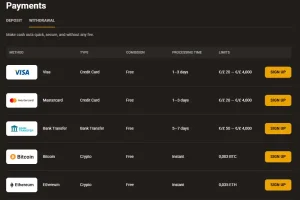
A specialist review reports Bitcoin confirmations taking 10–30 minutes, compared with a few minutes for Litecoin. These are estimates from that review, not a promise about every transfer. Network conditions and the casino’s own processing can affect how long you wait, so a quicker confirmation does not necessarily mean a quicker account credit or withdrawal.
Before sending funds, check that the casino supports the exact coin and network shown in your wallet. Confirm the destination address and network carefully; a transfer sent using incompatible details may not arrive as intended. Also check whether the casino displays deposits and balances in the coin itself or converts them to another unit for play. That affects how easy it is to track what you have deposited and what remains.
Coin choice does not make the value stable. Cryptocurrency prices can fluctuate significantly, changing the value of funds between deposit and withdrawal. If you later convert a withdrawal to fiat through an exchange, expect KYC procedures at that point; using crypto at the casino does not remove them.
For a no-KYC casino, compare payment handling rather than treating “more coins” as a quality score. A coin with faster reported confirmations may suit you if transfer timing is the priority; another supported coin may fit your existing wallet better. The better option depends on the criterion that matters to you. Check the payment instructions before transferring, and make sure your use complies with local laws.
Are online Bitcoin casinos legal in the UK?
You are not committing a criminal offence by playing at an offshore crypto casino, but an operator targeting British customers must hold a UK Gambling Commission licence. Offshore casinos are outside UKGC oversight and do not provide UK-backed consumer protection or formal dispute resolution.
How do I avoid KYC checks at crypto casinos?
You can choose a casino whose initial registration accepts an email address or a wallet connection without asking for identity documents. That does not guarantee you will avoid checks later: a casino may request ID for a large withdrawal, suspicious activity, or a switch from crypto to fiat.
How long do withdrawals take?
Crypto withdrawals are usually processed after the casino’s internal review, which can take under an hour at trusted operators; first withdrawals may receive a manual review lasting a few hours. After processing, Bitcoin confirmations can take 10–30 minutes.
Material created by the team SlotLair