

Trustworthiness starts with the operator responsible for the service and whether it holds the licence required to offer gambling in Great Britain.
What Trustworthiness Means in a UK Casino
A trustworthy online casino is not defined by its branding, a polished website or a confident claim about how it treats players. For customers in Great Britain, the first test is whether the operator holds the relevant UKGC Licence for offering remote gambling. That requirement applies whether the business is based in Britain or operates from elsewhere.
This is a baseline, not a badge for marketing. A casino may describe itself as established, popular or carefully run, but those words do not replace the licence required to offer real-money gambling to customers in England, Scotland and Wales. If the operator cannot be matched to the appropriate licence, its assurances do not establish that it is authorised to serve the British market.
Start with the operator, not the advert
Casino brands and the legal businesses behind them are not always named in the same way. That makes it important to identify the operator responsible for the gambling service, rather than relying only on the name displayed in a banner or at the top of a website. The relevant question is whether the business offering the facilities to customers in Great Britain holds the required UKGC Licence.
When you’re choosing an online casino, payout timing is one practical detail to check alongside your own priorities. This list gives you the stated payout speed for each operator.
1. Revery Play
Payout speed: 1-3 business days Revery Play lists a payout speed of 1–3 business days. You can use that timeframe as one detail when considering the operator.
2. Zombillion
Payout speed: 1-3 business days Zombillion lists a payout speed of 1–3 business days. You can factor that stated timeframe into your choice.
3. SpinFormula
Payout speed: 1-3 business days SpinFormula lists a payout speed of 1–3 business days. This gives you a stated timeframe to consider when assessing the operator.
4. Jetsetspins
Payout speed: 1-3 business days Jetsetspins lists a payout speed of 1–3 business days. You can take this stated timing into account when deciding whether it suits you.
5. EvoSpin
Payout speed: 1-3 business days EvoSpin lists a payout speed of 1–3 business days. This is the available payout detail for you to consider.
6. NightWin
Payout speed: 1-3 business days NightWin lists a payout speed of 1–3 business days. You can use this stated timeframe as one point in your assessment.
7. Chanze
Payout speed: 1-3 business days Chanze lists a payout speed of 1–3 business days. You can consider this timing when deciding whether the operator meets your needs.
8. Britsino
Payout speed: 1-3 business days Britsino lists a payout speed of 1–3 business days. This stated timeframe is a practical detail for you to weigh.
9. WinBeast
Payout speed: 1-3 business days WinBeast lists a payout speed of 1–3 business days. You can factor this timing into your decision.
10. NightLuck
Payout speed: 1-3 business days NightLuck lists a payout speed of 1–3 business days. You can use this stated timeframe as one consideration.
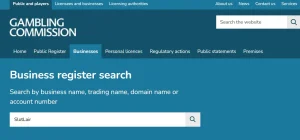
Check the licence details against the UK Gambling Commission’s public register before depositing. The comparison should make sense: the operator connected with the casino should correspond to the licensed business, and the licence should cover the activity being offered. A logo or a line of text saying “licensed” is a claim made on the site; checking the register is a way to test that claim independently.
If the relationship between the brand and the licensed business is unclear, do not fill the gap with an assumption. A familiar name, a professional-looking site or a mention of regulation elsewhere on the page is not the same as confirming the operator’s authorisation. Trust begins with a match you can verify.
Location does not remove the requirement
The operator’s business address does not change the central test for Great Britain. Remote gambling businesses offering facilities to consumers there need the relevant UK Gambling Commission licence regardless of where they are based. An overseas address is therefore not, by itself, a reason to treat the licence requirement as optional.
Best Offshore Casino Sites: UK Licensing Explained
This matters because “international” can sound reassuring while saying very little about permission to serve British customers. A business may be incorporated or managed outside Britain and still need the appropriate UKGC Licence for its remote gambling offer to consumers in Great Britain. The important point is not where the company is located, but whether it has the authorisation required for the market it is serving.
A trustworthy casino should make it possible to establish who operates the service and to check that business against the regulator’s public information. If the site presents a brand name but leaves the responsible operator difficult to identify, the uncertainty is relevant. It is not proof of wrongdoing by itself, but it leaves the most basic trust question unanswered.
What a licence does—and does not—tell you
A valid licence is a threshold for judging whether a casino is authorised to offer real-money gambling in Great Britain. It is not a universal score for every quality a player might care about. It does not, by itself, tell you which casino best suits your preferences, nor does a persuasive design or a generous-sounding promotion make an unlicensed service acceptable.
Keep the criteria separate. Authorisation answers whether the operator has the required permission to serve this market. Other questions concern the way a particular service handles its terms and customer account. Treating every positive feature as evidence of licensing confuses two different tests; treating a licence as proof that every experience will be ideal makes the opposite mistake.
That distinction keeps the phrase “most trustworthy” useful. The first comparison is not between attractive offers or familiar names. It is between an operator whose required authorisation can be confirmed and one whose status cannot. Only after that threshold is clear does it make sense to weigh other qualities.
Do
- Identify the operator responsible for the service
- Check the licence against the UKGC public register
- Verify that the operator matches the licensed business
Don’t
- Rely on a banner or the name at the top of a website
- Assume a professional-looking site is authorised
- Treat a “licensed” logo as independent verification
A practical first pass
Before opening an account or depositing, identify the operator behind the casino and check its licence number on the UK Gambling Commission’s public register. Confirm that the details correspond to the service you intend to use. If the operator or licence information does not line up, pause rather than relying on a site’s own wording.
This approach is deliberately narrow. It does not rank casinos, and it does not promise that licensing alone settles every question about a player’s experience. It establishes the minimum legal basis for calling a real-money casino trustworthy in Great Britain: the operator must hold the relevant UKGC Licence, wherever its business is based.
The test is simple. The checking matters.
Which Rules Apply Where You Live
The rules that determine whether an online casino is regulated by the UK Gambling Commission depend on where you are in the United Kingdom. Great Britain and Northern Ireland do not sit under the same remote-gambling jurisdiction. That distinction matters when you assess a casino’s claim to be trustworthy: a UKGC Licence has a specific territorial scope, rather than automatically covering every part of the UK.
For customers in England, Scotland and Wales, the relevant framework is the Gambling Act 2005. The Gambling Commission’s remit under that Act covers Great Britain, including remote gambling provided to people there. An operator’s location does not change that boundary. The important question is whether it offers gambling to consumers in Great Britain, not whether its offices are nearby or its company is registered elsewhere.
Northern Ireland is different. It is not within the Gambling Commission’s remit for remote-gambling provision, and the Gambling Act 2005 does not apply there in the same way as it does in Great Britain. Northern Ireland has a separate legislative framework, including the Betting, Gaming, Lotteries and Amusements (Northern Ireland) Order 1985. So a statement about the UKGC regime in Great Britain should not be read as a complete description of the rules applying to a player in Northern Ireland.
Non-UK Licence Casinos: Rules and Player Protection
That is a legal boundary, not a difference in wording. A casino page may use “UK” broadly, but that label alone does not tell you which jurisdiction’s rules govern the service available where you live. If you are in Great Britain, the UKGC’s role is relevant to remote gambling offered to you. If you are in Northern Ireland, you should not assume the same regulator has the same authority there.
Why location changes the meaning of a licence claim
A licence is meaningful only in relation to the regulator and the market it covers. When a casino presents a UKGC Licence as evidence of its status for Great Britain, that is a claim about the UKGC framework. It does not, by itself, establish that the identical regime applies in Northern Ireland. Conversely, the fact that Northern Ireland falls outside the Commission’s remote-gambling remit does not make it part of Great Britain or extend the UKGC’s jurisdiction there.
For customers in England, Scotland and Wales, the Gambling Act 2005 and the UKGC remit apply; however, Northern Ireland operates under a separate legislative framework, including the 1985 Order.
This can make broad claims such as “regulated in the UK” difficult to interpret. Ask what the wording refers to: the operator’s general corporate status, its service to consumers in Great Britain, or a separate legal position in Northern Ireland? Those are not interchangeable. A trustworthy explanation should identify the applicable jurisdiction clearly instead of relying on a national label that conceals the difference.
The same care applies when a site says it accepts customers from across the UK. Availability is not the same as proof that one regulatory framework governs every customer. Where you live determines which legal boundary is relevant. A casino’s marketing language cannot redraw the Gambling Commission’s remit.
A practical reading of “UK-regulated”
If you live in England, Scotland or Wales, read a UKGC claim in the context of Great Britain’s rules for remote gambling. If you live in Northern Ireland, do not treat that claim as confirmation that the Commission regulates remote gambling there in the same way. The point is not that one phrase settles every question about a casino; it is that the phrase must be understood within the territory where the regulator has authority.
This distinction also helps make comparisons fair. Two pages may both describe an operator as “UK” facing, yet that does not prove they are making the same regulatory claim. One may be discussing service offered to customers in Great Britain; another may use the term without specifying the location. If the wording leaves the jurisdiction unclear, the claim has limited value as evidence.
Merkur Casino Online UK: Games, Demos and Checks
For a reader comparing online casinos, trust therefore starts with the right geographical question. Are you assessing the service as a customer in Great Britain, or as a customer in Northern Ireland? Once that is clear, you can interpret regulatory statements without assuming that the whole country shares one remote-gambling regulator. The distinction is easy to overlook, but it is not a footnote.
The useful test is precise: treat UKGC oversight as relevant to remote gambling offered to consumers in Great Britain, and do not extend that conclusion automatically to Northern Ireland. Northern Ireland’s separate framework means that a description of Great Britain’s licensing rules is not a substitute for understanding the local position there. “UK” is not a jurisdictional shortcut.
GAMSTOP, Self-Exclusion and Sites Outside the Scheme
GAMSTOP matters when you assess a casino’s claims because it is part of the protection framework for online gambling in Great Britain. Online operators covered by the UK Gambling Commission regime must participate in the scheme. That requirement became compulsory on 31 March 2020.
GAMSTOP allows a person to self-exclude from participating online gambling operators in Great Britain. Its value is that it can apply across those operators, rather than requiring you to contact each one individually. It is a practical safeguard for someone who wants to stop access to regulated online gambling accounts. It is not a general certification of a casino’s quality, nor does a casino’s claim about GAMSTOP participation establish that it is trustworthy.
Risk of Unregulated Sites A claim that a site serves British customers but is outside GAMSTOP may indicate that the operator is not operating within the UKGC regulatory regime.
What “not on GAMSTOP” can tell you
A site may describe itself as a non-GAMSTOP casino, or say it accepts customers who have self-excluded through the scheme. Treat that wording as a reason to examine its regulatory status, not as evidence that the operator is safer or more reliable. In Great Britain, an online operator offering gambling under the UKGC regime is required to participate. A claim that a site serves British customers but is outside GAMSTOP therefore raises a direct question about whether it is operating within that regime.
The label alone does not answer that question. It may be used loosely, and it does not identify who operates the site or which rules apply to it. Nor does it tell you whether you would have the protections associated with a UKGC-regulated operator. The relevant distinction is not whether a website uses the words “non-GAMSTOP”; it is whether the operator is authorised to offer gambling to customers in Great Britain and is subject to the corresponding requirements.
This matters because a person searching for an alternative after self-excluding may be especially exposed to promotional claims. A site that presents access around an exclusion as a benefit is not demonstrating that it has safeguards suited to your circumstances. If you have chosen to self-exclude, using another site to get around that decision defeats the purpose of the protection. That is the wrong kind of flexibility.
The scheme has a defined boundary
GAMSTOP participation is a requirement for operators within the UKGC regime for Great Britain. It should not be treated as a universal system covering every gambling website that can be reached online, or as a guarantee that every site a British customer encounters is included. A site outside the scheme may be outside the regulated framework, rather than an exception approved by the regulator.
That boundary also matters when reading claims about “trustworthy” casinos that are not on GAMSTOP. Trust cannot be established by a site’s own description, a promise of access, or the absence of a GAMSTOP reference. If a business offers online gambling to customers in Great Britain, the key issue is whether it has the relevant UKGC authorisation. A non-GAMSTOP claim does not replace that check.
Casino Without a UK Licence: Rules for Great Britain
GAMSTOP is also not a substitute for understanding what self-exclusion means for you. It is a tool for restricting access to participating operators, not a judgement about whether gambling is suitable for a particular person. If you have registered because gambling is causing harm or you need a firm break, a website advertising ways to bypass that restriction is not a sensible alternative. The safer response is to keep the exclusion in place and avoid opening another gambling account.
So, when a casino says it is outside GAMSTOP, read the statement as a regulatory and safety question—not as a recommendation. For Great Britain, participation is required of operators in the UKGC online regime. The scheme’s limits are the limits of its coverage: it cannot make an unregulated site part of the system simply because that site is accessible.
Real-Money Play: Checks, Limits and Bonus Terms
Trust in a real-money casino is tested in the details that affect your account: when you can start playing, how you control spending and what a promotion asks you to do before winnings become withdrawable. These conditions are more useful to compare than a headline bonus alone.
Checks before play
Under UK rules, an operator must verify your identity before you can deposit or play. That means registration is not the point at which checks become optional: the account must be cleared before real-money activity begins. Look for clear explanations of what information is needed and how to resolve a problem if the details you provide cannot be matched.
Verification is a practical condition of play, not merely a box to tick after you have deposited. If the process or its timing is unclear, you cannot confidently plan when you will be able to use the account. Keep the operator’s instructions to hand and make sure your registration details are accurate.
Limits you can control
A casino should prompt new customers to set a financial limit before their first deposit and make account-level limit controls accessible. Compare the clarity of those controls: can you find where to set or change a limit without searching through promotional pages? A useful account setting is one you can locate and understand.
Changes do not necessarily take effect in the same way. Reducing a limit applies immediately, while an increase is subject to a cooling-off delay. That distinction matters if you are reviewing your budget: lowering a limit can take effect straight away, but you cannot assume that raising it will. The pause is deliberate.
Offshore casinos for UK players: what to know
What a bonus really requires
Treat a bonus as a set of conditions, not as cash added without strings. Read the wagering requirement and identify what amount it applies to; then check whether eligible games, payment methods, expiry terms or customer restrictions affect the offer. The promotional headline cannot answer those questions by itself.
A specialist review gives the example of a £20 bonus with 10x wagering: the player must place £200 in total stakes to meet that requirement. The calculation shows why a small-looking multiple can represent substantial play. It does not mean the player will earn that amount back, or that meeting the wagering condition guarantees a profit.
The same kind of specialist review describes a 100% match bonus capped at £200 with a 30x rollover. The cap, match rate and rollover all shape the offer; comparing only the percentage match misses the cost of qualifying. Check whether the rollover is calculated on the bonus, the deposit, or another stated base, and read the terms rather than assuming.
Welcome deals may also be restricted to new customers and one per household, and some payment methods, including certain e-wallets, may be excluded. A payment method that works for deposits is not automatically eligible for a promotion. Check the offer terms before depositing if the bonus is part of your decision.
The better offer is not automatically the one with the largest advertised amount. Compare the qualifying rules, the wagering total and any restrictions against how you intend to play. If the terms are hard to find or leave key conditions unclear, the headline has done its job; your comparison has not.
Slots: Stake Limits and Wagering Contributions
A slot’s stake limit and its contribution to bonus wagering are separate questions. The first is set by rules for online slots in Britain; the second depends on the promotion’s terms. Checking both gives you a clearer comparison than looking at a bonus headline alone.
For players aged 25 and over, the maximum stake is £5 per spin. If you are aged 18 to 24, the limit is £2 per spin. These are maximums, not recommended stakes: you can choose to stake less, and a casino cannot make a higher slot stake available by describing it as a special game feature. The age distinction matters when comparing slot terms, because the limit that applies to you depends on your age.
Anjouan Casino Licence in the UK: What It Means
Bonus contribution is a different measure. A specialist review describes slots as counting at 100% towards wagering, while live table games and blackjack may count at a lower rate or not count at all. Treat that as a reported comparison, not a promise that every casino applies the same weighting. The terms for the specific promotion determine which games qualify and how much each contributes.
The arithmetic can change the practical value of a bonus. If slots contribute fully, each eligible stake counts in full towards the wagering target; if a game contributes less, you may need more total stakes to reach that target. If a game is excluded, playing it will not advance the wagering requirement. A generous-looking offer can therefore be less useful if your preferred games carry reduced contribution.
Before opting in, check the promotion’s game-weighting table and confirm that the slots you intend to play are included. Look for distinctions between slot games, live tables and blackjack, rather than assuming all casino games count alike. Also check whether the weighting applies to bonus funds, free spins, or both: the wording may set different conditions for each. Clear terms matter more than a broad claim about slot contribution.
For a trustworthy online slots comparison, use two criteria: whether the stake allowed matches the age-based cap, and whether the promotion explains game contribution plainly. Neither criterion establishes that a casino is trustworthy on its own, but both make the slot-specific conditions easier to judge. Clear terms. No guesswork.
Bitcoin Casinos: What Can Be Verified
Bitcoin is a payment label, not evidence that an online casino is trustworthy. It does not establish who operates a site, which rules apply to it, or whether it is authorised to offer gambling to you. A trustworthy Bitcoin casino must meet the same basic licensing test as any other remote gambling business serving customers in Great Britain.
The UK Gambling Commission requires remote gambling businesses offering facilities to people in Great Britain to hold the relevant UKGC Licence, wherever the business itself is based. A company’s overseas address does not remove that requirement. Nor does describing a site as a Bitcoin casino create an exception.
Attention A Bitcoin payment label is not evidence of trustworthiness or regulatory authorisation; the operator must still hold a valid UKGC Licence to serve Great Britain.
The useful check is therefore not whether a site mentions Bitcoin, but whether the operator and the website you are using can be matched to an appropriate entry on the Commission’s public register. Check the operator’s legal name and the domain, not just a logo or a general claim about being regulated. If the details do not line up, treat that as a reason to pause rather than filling the gap with an assumption.
This is a narrower test than judging how a cryptocurrency payment works. A payment method can affect how you move funds, but it cannot substitute for regulatory authorisation. Likewise, a site’s claims about its technology, transaction handling or international reach do not establish that it is licensed to serve Great Britain. The licence is the relevant evidence for that question.
Do not treat a list of Bitcoin casinos as a list of trustworthy operators unless each entry has been checked against current regulatory records. Names can change, domains can differ, and a site’s own description is not independent confirmation. A general label such as “licensed” is not enough if it does not identify the regulator and the matching operator details.
There is no sound basis for assuming that every site offering Bitcoin is licensed, or that every licensed operator offers Bitcoin. Those are separate claims and need separate verification. If you cannot confirm the relevant UKGC Licence for the operator serving Great Britain, the payment label should not reassure you. A familiar coin is still only a coin.
For a practical comparison, record the operator name, the domain you intend to use and the corresponding register entry. If those identifiers do not match, do not rely on a similarly named company or a different website as proof. This approach will not tell you whether a Bitcoin payment suits your needs; it answers the prior question of whether the operator has the required authorisation for the British market.
The criterion is clear: verifiable licensing, not the currency advertised. A Bitcoin option may be part of a site’s payment offer, but it cannot make an unverified operator trustworthy.
Choosing a Casino by the Criterion That Matters to You
“Best” has no useful meaning until you decide what you want to compare. A casino that suits you because it gives you control over promotional messages may not be the one you prefer for straightforward bonus terms. Set your priorities first; otherwise, a comparison can mistake a long list of offers for a good fit.
If promotions matter, check whether you can choose the kinds of offers you receive and how they reach you. Casinos must give customers more control over both. The practical question is whether the available choices match your preferences: for instance, whether you can limit promotional contact without losing the account features you value.
If you are considering a bonus, put its conditions in a separate column from its headline value. Look for the qualifying steps, any wagering requirement, eligible games, payment restrictions and expiry terms. A larger advertised offer is not automatically better if its conditions make it harder for you to use. Bonus funds and free spins have expiry periods; a specialist review has described periods ranging from 7 to 30 days, but an individual offer’s terms are what matter.
For some readers, clarity is the deciding factor. Prefer terms that answer practical questions directly: what you must do, what is excluded and when an offer ends. If you have to infer a condition from several pages, that is a real comparison point, not a minor inconvenience.
A simple table can keep the decision honest:
| Your priority | What to compare |
|---|---|
| Control over promotions | Choices for offer types and contact channels |
| Bonus conditions | Wagering, eligible games, restrictions and expiry |
| Clear terms | Whether key conditions are easy to find and understand |
The winner depends on your criterion. If you do not want promotional messages, control may matter more than the size of an offer. If you are comparing bonuses, readable conditions may matter more than the headline. Trust is not a trophy awarded to the loudest promotion.
What Casino Reviews Can—and Cannot—Prove
A casino review can help you understand what an operator says it offers, how its terms are presented and what a reviewer found when examining the site. It cannot, by itself, establish that every claim is accurate or that the operator has a clean regulatory record. Treat the review as a starting point, then compare specific claims with public records.
For instance, a specialist casino review may discuss 333casino.com in connection with Grace Media. The UK Gambling Commission’s public register identifies 333casino.com as a White Label domain associated with Grace Media (Gibraltar) Limited, under account 57869. That entry is a checkable link between a domain and an operator account; it is not a rating of the casino or a guarantee about its conduct. Register details can change, so check the record directly rather than relying on a review’s undated summary.
Regulatory action is another useful test of review claims. On 26 June 2025, the Gambling Commission imposed a £60,000 financial penalty on Grace Media for breaches involving self-exclusion and consent for direct electronic marketing. A review that discusses the company’s standing but omits this action may leave out material context. Conversely, the penalty does not prove that every statement in every review about a related domain is false. The evidence supports a narrower conclusion: the regulator took action against the named company for specified breaches.
When reading reviews, separate three kinds of statement: what the reviewer observed, what the operator claims, and what a regulator records. Look for the legal entity and account details behind a brand, and compare them with the Commission’s register and published enforcement notices. Be cautious with broad labels such as “trusted” unless the review explains the criteria and points to evidence. A high score is an opinion; a dated regulatory notice is a record.
This approach does not require you to dismiss reviews. It shows what each can establish, and where its evidence stops. Useful distinction.
How do I verify a casino’s licence?
Identify the legal operator and check their details and domain against the UK Gambling Commission’s public register.
What does GAMSTOP participation indicate?
It is a compulsory requirement for online operators under the UKGC regime in Great Britain, allowing players to self-exclude across multiple sites.
How do slot stake limits work?
Maximum stakes are £5 for players aged 25+ and £2 for those aged 18-24.
Are Online Casinos Trustworthy? Check the Safeguards
Online casinos can be trustworthy when the protections around your account are clear and there is a route to raise problems. In Great Britain, the UKGC framework gives customers more than an operator’s own promises: licensed businesses must provide responsible gambling tools, including self-exclusion, and a process for complaints. That does not make every experience trouble-free. It gives you safeguards to use when something goes wrong.
Start with control. A regulated casino should make account-level tools accessible, so you can set limits and exclude yourself if you need to stop. You should also be able to control which types of promotions you receive and through which channels. These choices matter because protection is useful only when it is visible and usable, not buried in account settings.
If a dispute cannot be resolved directly with the operator, customers must have access to an approved Alternative Dispute Resolution service. Check the operator’s complaints information before playing: it should explain how to submit a complaint and where to go if you remain dissatisfied. Keep relevant messages and account details together. A clear record makes it easier to explain what happened.
Support beyond the casino matters too. The National Gambling Helpline is available around the clock on 0808 8020 133. You do not need to wait for a financial or account dispute to seek help with gambling-related concerns. If playing is causing harm, contacting a support service is a practical step, not an admission of failure.
So, are online casinos trustworthy? The useful test is not whether a site calls itself safe, but whether customer protections and routes to help are in place. A licence is a starting point, while accessible controls, a complaints route and independent dispute resolution provide practical recourse. None removes the need to decide what is right for you. Safeguards, not slogans.
How to Check Verification and Withdrawal Conditions
Treat identity checks and withdrawal timing as separate things to verify. Before using an account, read the operator’s payment and verification pages and note what it asks you to provide, when checks may happen and how withdrawals are handled. A trustworthy online casino should explain these steps clearly; vague wording leaves you unable to plan.
Identity checks commonly involve a photo of your passport or driving licence and a recent utility bill. Check that the name and address on your documents match the account details, and look for instructions on image quality and submission. If the operator asks for additional information, follow its stated process and use the account area or another official contact route to submit it.
Do not assume that depositing successfully means your account is ready for withdrawal. An operator may request documents when you first cash out, so check for that possibility before you play. One specialist review reports that a first withdrawal can take an additional 12–24 hours while documents are checked. Treat that as a reported example, not a standard timetable for every casino.
Payment estimates need the same scrutiny. A specialist review reports PayPal withdrawals clearing in roughly 4–6 hours on weekdays, and taking 8–10 hours from Friday to Sunday. Those timings are not a general promise: the operator’s review process and the payment service’s handling can affect when funds arrive. Check whether the stated estimate begins when you request a withdrawal or after the operator approves it.
Also confirm which payment methods are available for withdrawals; deposit and withdrawal availability are separate. Read the conditions for the method you intend to use, including any stated processing stages, before making a deposit. If the information is unclear, ask customer support to explain the sequence and keep the reply. That gives you something concrete to compare with the published terms if a payment takes longer than expected.
A clear process is more useful than a confident slogan. Check the documents, the point at which checks happen, and what the withdrawal estimate actually measures. Then you can judge whether the account and payment conditions suit you.
What is the context of GAMSTOP and self-exclusion?
GAMSTOP is part of the Great Britain regulatory framework: online gambling operators regulated by the UKGC have been required to participate since 31 March 2020. Self-exclusion failures can have serious consequences; the UKGC fined Grace Media £60,000 in June 2025 for breaches involving self-exclusion and marketing consent.
What payment types are listed?
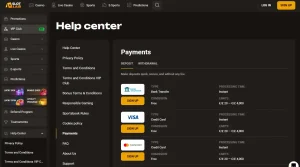
The payment types mentioned are PayPal, debit cards and bank transfers. Withdrawal times and any charges vary by method.
How can I check whether a casino is legal?
Identify the business operating the casino, then check its details and licence on the UK Gambling Commission’s public register. Make sure the licensed operator matches the service you plan to use; a licence claim on the casino’s own site is not enough.
Is LeoVegas legitimate and safe to bet with?
LeoVegas Gaming PLC is listed by the Gambling Commission under operator account number 39198, and leovegas.co.uk is listed as its active UK-facing domain. This supports that the operator is licensed for the Great Britain market, but a licence alone does not guarantee every aspect of your experience.
Material created by the team SlotLair