

The difference between overseas branding and UKGC status shapes the legal boundary, protections and practical choices around bonuses and withdrawals.
What “Foreign Casino” Means in the UK
In the British market, “foreign casino” describes an online gambling operator’s relationship with the UK Gambling Commission (UKGC), not simply the country suggested by its name, website address or presentation. The useful distinction is whether the operator holds a UKGC licence while accepting British customers. If it accepts customers in Britain without that licence, it falls within the meaning of a foreign casino used here.
That definition is narrower than “a casino based abroad”. A company may have an overseas address or use a web address associated with another country; neither detail, by itself, tells you whether it is licensed by the UKGC. Conversely, the term is not a judgement about the quality of a website or the games it displays. It identifies a regulatory category. Location can be a clue about an operator’s business, but it is not the test.
The licence is the dividing line
When you compare foreign online casinos, start by separating two questions: where an operator appears to be based, and whether it holds the relevant UK licence. For this section’s definition, the second question decides the category. An overseas operator that accepts British customers without a UKGC licence is a foreign casino, even if its site is presented in English or otherwise appears tailored to the UK.
When considering foreign casinos as a UK player, payout timing is one practical detail to check. Use the stated withdrawal estimate as one factor when deciding which options to explore.
1. Revery Play
Payout speed: 1-3 business days Revery Play lists a payout speed of 1–3 business days. You can use that estimate as one point of reference when considering it.
2. Zombillion
Payout speed: 1-3 business days Zombillion lists a payout speed of 1–3 business days. Keep that stated timeframe in mind as you assess whether it suits you.
3. SpinFormula
Payout speed: 1-3 business days SpinFormula lists a payout speed of 1–3 business days. That estimate gives you a concrete detail to consider.
4. Jetsetspins
Payout speed: 1-3 business days Jetsetspins lists a payout speed of 1–3 business days. You can factor this stated timing into your decision.
5. EvoSpin
Payout speed: 1-3 business days EvoSpin lists a payout speed of 1–3 business days. Consider whether that estimate fits your expectations for withdrawals.
6. NightWin
Payout speed: 1-3 business days NightWin lists a payout speed of 1–3 business days. You have that stated timeframe to weigh when considering the operator.
7. Chanze
Payout speed: 1-3 business days Chanze lists a payout speed of 1–3 business days. This gives you a specific withdrawal estimate to take into account.
8. Britsino
Payout speed: 1-3 business days Britsino lists a payout speed of 1–3 business days. You can consider that estimate as part of your assessment.
9. WinBeast
Payout speed: 1-3 business days WinBeast lists a payout speed of 1–3 business days. Keep this stated withdrawal timing in mind as you compare your options.
10. NightLuck
Payout speed: 1-3 business days NightLuck lists a payout speed of 1–3 business days. You can use that estimate as a practical detail when considering it.
The reverse distinction matters too. A company’s overseas base does not, on its own, make it a foreign casino in this sense if it holds a UKGC licence. The label is about the operator’s status in relation to the British market, not a map pin. A polished British-facing website is not a licence; nor is an overseas address proof that the operator lacks one.
This makes the phrase “online casinos outside the UK” imprecise when used as a regulatory category. It can mean sites operated from abroad, but that description alone does not establish whether they hold a UKGC licence. “Foreign casino” is more useful when it refers specifically to an operator accepting British customers without that licence. The criterion is plain, even if the website design is not.
Offshore licensing is a separate status
Foreign casinos are licensed offshore and are not regulated by the UKGC. An offshore licence and a UKGC licence are not interchangeable labels: the first does not make an operator UKGC-regulated. If a site presents an overseas licence, that tells you something about its stated licensing position, but it does not change the definition used for British customers.
Gibraltar Casino Licence: UK Rules Explained
This is why a site’s claims about being “international” or “licensed” need to be read carefully. Those words alone do not identify which regulator is involved, or whether the UKGC regulates the operator. For classification, the relevant point is not whether a licence is mentioned somewhere on the site; it is whether the operator holds a UKGC licence while accepting British customers.
A site may also look local without being locally regulated. Familiar language, pound-denominated displays or references to British players do not answer the licensing question. They are features of presentation, not substitutes for the regulator-based distinction. Treating them as evidence of UKGC status confuses the shop window with the paperwork.
A practical way to read the label
When you encounter a description such as “foreign online casino for UK players”, translate it into a specific question: does the operator accept British customers without a UKGC licence? If yes, it fits the definition. If the only information available is that the operator is based abroad, the label has not yet been established. Geographic origin and UK regulatory status are related topics, but they are not the same fact.
The same test applies to foreign online slots. A game’s theme, provider or appearance does not decide whether the casino offering it is foreign. The category concerns the operator, not an individual slot or the location implied by a game’s design. A table comparing sites would therefore need a column for UKGC status; a country name or flag would not settle the point.
Offshore casinos are not regulated by the UKGC, and they do not offer UKGC-mandated affordability checks.
For the same reason, “best foreign casino” is not a regulatory description and does not identify a single kind of operator beyond the definition. “Best” depends on the criterion being compared, while “foreign” here has one specific meaning: accepting British customers without a UKGC licence. Offshore casinos are not regulated by the UKGC, and they do not offer UKGC-mandated affordability checks. Those are important differences in status, not decorative details to be inferred from a site’s appearance.
Keep the test simple: classify the operator by its UKGC relationship, not by its branding or apparent home. That gives “foreign casino” a consistent meaning when comparing sites aimed at British customers. The distinction is regulatory, not geographical.
UK Players and the Legal Boundary
A British player’s legal position is not the same as an overseas operator’s. The key distinction is who is placing the bet and who is providing the gambling service. A person in the UK is not prohibited from betting with a casino licensed abroad. That does not give the operator permission to offer its service to customers here without a UK Gambling Commission (UKGC) licence.
There is no UK law that makes an individual’s act of placing a bet with an overseas operator illegal. A UK resident does not commit an offence simply by playing at a foreign casino, and there is no criminal penalty for the player on that basis. The fact that a site is outside the UK licensing system does not, by itself, turn the customer’s bet into a crime.
Merkur Casino Online UK: Games, Demos and Checks
That point is narrower than it may first sound. It describes the player’s position; it does not confirm that the operator is entitled to serve the UK market. Those are separate questions, with separate answers. A British player may not be prohibited from placing the bet, while the operator may still be acting unlawfully by accepting it.
The operator’s obligations are different
An operator without a UKGC licence cannot legally provide gambling facilities to customers in the UK. It is also illegal for an unlicensed operator to advertise its services here. These restrictions apply to the business offering the gambling service, not to the customer who places a bet.
So, if you see a foreign casino accepting UK players, the fact that a British customer can register or place a bet does not establish that the operator has the required UK authorisation. Nor does a licence issued outside the UK replace a UKGC licence for serving customers in this market. Access and legal permission are not interchangeable.
This is the point at which the phrase “foreign casino accepting UK players” can blur two different ideas. It may describe a site that will take a British customer’s bet. It does not, on its own, mean the site is legally permitted to provide gambling facilities to UK customers. The customer’s lack of criminal liability does not transfer to the operator.
That distinction matters when comparing offers. A prominent welcome promotion or an easy registration process tells you nothing by itself about whether the operator may legally serve the UK. The legal test is not whether the site appears available to you, or whether its licence comes from another jurisdiction. For the operator’s UK-facing service, the relevant question is whether it holds a UKGC licence.
Legal Boundary
An operator without a UKGC licence cannot legally provide gambling facilities or advertise its services to customers in the UK.
What the rule does—and does not—say
The boundary should not be recast as a ban on British players. A UK resident who places a bet with an overseas casino is not committing an offence merely by doing so. The rule instead places the legal obligation on the operator: without the UKGC licence, it cannot lawfully provide gambling facilities to UK customers or advertise its services in the UK.
That is why “the player is not prohibited” and “the operator may not lawfully serve the player” can both be true. They address different conduct. One concerns an individual placing a bet; the other concerns a business offering gambling facilities in this market. Treating them as the same question leads to a misleading conclusion in either direction.
It would be wrong to infer that every site that takes a British customer is legally approved for UK use. It would also be wrong to infer that the customer has committed a crime simply because the operator lacks a UKGC licence. The legal boundary falls on the operator’s provision and advertising, not on the player’s act of betting.
Applying the distinction
When you assess a site described as one of the best foreign casinos accepting UK players, separate the customer-facing claim from the legal status. “Accepting UK players” describes what the site allows in practice; it is not proof of permission to serve the UK market. “Licensed abroad” describes an overseas licence; it is not a substitute for UKGC authorisation.
If your comparison criterion is whether an operator is legally authorised to serve UK customers, the relevant distinction is straightforward: a UKGC licence is required for that service. If your question is whether a British player is prohibited from placing a bet with an overseas operator, the answer is different: the player is not prohibited on that basis and faces no criminal penalty for placing the bet.
USA Casinos for UK Players: Meaning and Risks
Keep the two positions separate. The operator’s obligation concerns the legality of providing gambling facilities and advertising in the UK. The player’s position concerns whether placing a bet is itself an offence. For a British customer, that act is not made illegal merely because the casino is licensed outside the UK. The operator’s legal duties remain its own.
Why Access Does Not Mean UKGC Protection
A foreign casino site appearing to accept British visitors does not make it a UK-regulated service. The relevant distinction is whether the operator holds a UK Gambling Commission (UKGC) licence. An offshore licence is not a substitute: offshore casinos are outside the UKGC’s regulatory system, and the Commission does not regulate them.
That difference matters when something goes wrong. A site may load, let you register and accept a deposit, yet still leave you without the protections attached to a UKGC-licensed operator. Access tells you that the site is reachable. It tells you nothing about whether the UKGC can supervise the operator or address a complaint about its conduct.
There is a further complication: a casino’s rules for accepting customers may not match what its website allows in practice. Gambling.com has reported that some casinos licensed outside the UK are meant to block British visitors, while some fail to enforce that restriction. This is a report about particular operators and conditions, not a dependable rule for every foreign casino. Even where a site accepts a visitor, that does not establish that the operator is authorised to serve the British market or that UKGC protections apply.
Attention: Access to a site does not equal UKGC protection; a foreign casino site appearing to accept British visitors does not make it a UK-regulated service.
The distinction is easy to miss when the experience looks familiar. A polished website, familiar casino games or a customer-support channel may create an impression of reassurance. None of those features gives the UKGC authority over an offshore operator. Nor does a licence from another jurisdiction make that operator subject to UKGC rules. The important comparison is not how similar the site looks, but which regulator, if any, has responsibility for its conduct in the UK.
The risk when a withdrawal is disputed
The clearest practical difference can appear when you try to collect winnings. Gambling.com has reported cases in which unlicensed sites refused to pay customers, leaving them without legal recourse. That does not mean every offshore operator will withhold winnings. It does mean that an accessible account and an apparent balance should not be treated as proof that a disputed payout can be resolved through UK regulatory channels.
With a UKGC-licensed casino, the operator falls within the Commission’s regulatory framework. With an offshore casino, the UKGC does not provide that same oversight. If the operator refuses payment, you cannot assume that the Commission can step in as your regulator or require the site to resolve the dispute. A foreign licence may place the operator under another authority, but it does not bring the UKGC’s protections with it.
That gap changes the value of a promise on a page. A displayed balance is not the same as money in your account, and a written withdrawal policy is only useful if the operator follows it and there is an effective route to challenge a refusal. If the site is outside UKGC oversight, you should not mistake its terms, support chat or branding for the protections available through a UK-licensed service.
Anjouan Casino Licence in the UK: What It Means
Offshore operators also do not offer UKGC-mandated affordability checks. That is another difference in the protection framework, not a minor detail about website design. The absence of those checks does not show that a site is safer or more flexible; it means a safeguard required of UKGC-regulated operators is not guaranteed by the UK regulator at an offshore site.
What access can and cannot tell you
A visitor may see the same basic sequence on a foreign site as on a licensed one: an account screen, a games lobby and a cashier. Those visible steps are not evidence of equivalent regulation. Nor does being able to play foreign casino slots establish that the operator is answerable to the UKGC. The regulator’s status is a separate question from whether the service can be reached.
For a fair comparison, keep those criteria apart. Reachability describes whether you can open the site. Regulation describes which authority oversees the operator. Customer protection describes what safeguards and complaint routes are available if there is a problem. One does not prove the others.
That is why a list of the best foreign casino sites for UK players cannot be judged by access alone. The more useful criterion is what protection exists if a deposit, account or withdrawal becomes disputed—and whether that protection is actually backed by UKGC oversight. On that measure, an offshore casino is not equivalent to a UKGC-licensed one, however straightforward the initial experience may seem.
Access vs Protection
Technical access to a site is not a substitute for UKGC regulatory oversight and the protections it provides.
The short version is blunt: access is not protection. A site that lets you in may still sit beyond the UKGC’s reach, and a complaint about unpaid winnings may have no UK legal route to resolve it. The distinction is consequential.
What UK Licensing Rules Mean for Overseas Casinos
The key distinction is between the operator’s legal permission to serve the British market and the player’s act of placing a bet. Those are separate questions. A foreign casino may hold a licence elsewhere, but that licence does not replace the permission required to offer online gambling to customers in England, Scotland and Wales.
For an operator, the rule is direct: an online gambling site must hold a Gambling Commission licence to offer its services in those nations. The requirement applies to the business providing the gambling, not just to companies based in Britain. A business located overseas is still within the rule if it offers gambling services to customers in the British market.
That makes the location of a website, its branding or the country named on an overseas licence poor substitutes for the relevant test. The question is whether the operator holds a UK Gambling Commission licence for the service it is offering. A licence issued by another jurisdiction does not satisfy that UK requirement.
Operator duties are not the player’s offence
The licensing rule applies to the operator. It does not mean that a British player commits an offence merely by placing a bet with a casino licensed outside the UK. There is no UK law prohibiting an individual from betting with an overseas operator.
That distinction is easy to blur because the same activity can be described from two sides: a company offering gambling, and a customer taking part in it. The legal position is not identical for both. The operator needs the required UK permission to provide services in England, Scotland and Wales; the player’s act of betting overseas is not itself illegal.
So, if you are assessing a foreign casino, do not treat “the player is not breaking the law” as proof that the operator is authorised to serve British customers. Nor does an overseas licence establish that it has permission under the UK system. These are different checks, answering different questions.
What the UK licence signifies
A UK Gambling Commission licence is the relevant authorisation for an operator offering online gambling to people in England, Scotland and Wales. Without it, the operator cannot legally offer those services there. The rule is not switched off by the company’s foreign address or by the fact that its licence comes from another regulator.
This is the regulatory boundary to keep in view when comparing foreign casinos in the UK. A site may accept a British customer, but acceptance alone does not establish that the operator holds the UK licence required to provide gambling facilities to that customer. Access and authorisation are not interchangeable.
Do
- Check if the operator holds a UK Gambling Commission licence
- Understand that you are not committing an offence by betting with an overseas operator
Don’t
- Assume an overseas licence satisfies UK requirements
- Treat a site’s availability as proof of legal permission to serve the UK
The same distinction matters when a site presents itself as licensed. “Licensed” without specifying the regulator answers only part of the question. For the British market, the relevant issue is whether the operator holds the Gambling Commission licence required to serve customers in the covered nations. A foreign licence may govern the operator elsewhere; it does not confer UK authorisation.
A practical comparison criterion
If you are comparing overseas casinos, separate the criteria into two columns: the operator’s status under UK rules, and your own legal position as a player. For the first, ask whether the operator holds a UK Gambling Commission licence to offer its service in England, Scotland or Wales. For the second, the fact that you place a bet with an overseas casino does not, by itself, make you a criminal.
That comparison does not turn an unlicensed operator into a UK-authorised one. Offshore casinos are not regulated by the UK Gambling Commission, and they do not provide UKGC-mandated affordability checks. Those limits are relevant to the operator’s regulatory status, not evidence of wrongdoing by a player.
The clearest conclusion is deliberately narrow: the UK licensing obligation falls on the business offering the gambling, while a British person’s act of betting with an overseas operator is not itself prohibited. Keep those points separate. One rule concerns permission to serve the market; the other concerns the customer’s act.
Bonuses: Compare the Turnover, Not the Headline
A large welcome offer is only one part of the comparison. The other is the qualifying play attached to it: the amount you must wager before bonus funds can become withdrawable. A headline can look generous while its conditions require substantial turnover.
Trusted casinos not on GamStop UK: checks and limits
Specialist casino reviews describe deposit matches, free-spins packages, no-deposit bonuses and cashback offers among the formats found at foreign casinos serving UK players. Each works differently. A deposit match adds bonus funds in relation to a deposit; free spins are tied to eligible games; a no-deposit offer does not require an initial deposit to receive the stated bonus; and cashback returns some value under the offer’s terms. The label alone does not tell you what you can withdraw.
The reason larger welcome packages may appear on foreign casino sites is also a matter of terms, not necessarily value. A specialist review attributes their larger offers to operators not being bound by UKGC restrictions on bonus terms, wagering requirements and promotional language. That can allow more prominent headline figures, but it does not make the attached conditions lighter. Offshore casinos are not regulated by the UK Gambling Commission, and they do not provide UKGC-mandated affordability checks.
Turn the bonus into a play requirement
A wagering requirement is a multiple applied to a bonus amount. To compare two offers, calculate the qualifying bets required before treating either bonus as potentially withdrawable. A higher bonus can demand more turnover, and the multiple matters as much as the advertised amount.
For instance, a 100% match on a £100 deposit gives £100 in bonus funds. If the wagering requirement is 35x, the calculation is £100 × 35: you must place £3,500 in qualifying bets before those bonus funds convert to withdrawable cash. That is the turnover requirement, not a promise that you will have £3,500 left afterwards. Bets can lose, and the bonus does not remove that risk.
Calculating Turnover
Identify the bonus
Take a bonus amount, such as £100.
Apply the multiple
Multiply the bonus by the wagering requirement (e.g., £100 × 35x).
Determine total play
Calculate the resulting qualifying bets required (e.g., £3,500) before funds become withdrawable.
The same arithmetic shows why a modest-looking bonus can still carry a significant condition. A specialist review gives the example of a £20 bonus with a 35x requirement: the qualifying turnover is £700. Compare that with the £100 match example and the difference is clear. The larger offer requires more play in absolute terms, even though both use the same multiple.
Before accepting an offer, identify which funds the multiple applies to: the bonus, the deposit, or both. Check which games count towards qualifying turnover and whether any other conditions affect conversion or withdrawal. The examples above calculate turnover from the bonus amount; an offer using a different basis would produce a different result. If the wording does not make the basis clear, the headline is not enough to compare the deal.
A practical comparison table needs at least four entries: bonus format, amount offered, wagering basis and resulting qualifying turnover. Keep the cash value separate from the turnover figure. That makes it harder for a large promotional number to disguise the work required to clear it.
The better offer depends on your criterion. If you value a larger headline, one package may stand out; if you prioritise lower required turnover, another may compare better. Neither figure, by itself, establishes which bonus is more useful. Read the conditions first. The headline can wait.
When an Overseas Site Still Lets You In
A site loading in Britain is not proof that its operator is authorised to serve British customers. Some overseas casinos are intended to block visitors from the UK, yet a report by gambling.com says that some do not enforce those blocks. The report also notes that a basic VPN can bypass an access restriction.
That describes a technical condition, not a change in the operator’s status. A page may open, and its registration form may accept details, while the casino remains licensed offshore and outside the regulation of the UK Gambling Commission. Access does not turn an offshore licence into a UKGC licence.
The distinction matters because a block, where one exists, is an access control; it is not the same as UK regulatory oversight. Equally, the absence of a visible block should not be read as confirmation that the operator is permitted to serve British customers. A website’s availability alone cannot establish that.
A VPN can make a connection appear to come from somewhere else, which may affect what a website displays or allows you to open. But it does not change who operates the casino, which regulator oversees it, or what protections apply to you. Using one to get past a restriction is not a route to UKGC coverage.
Offshore operators also do not provide the UKGC-mandated affordability checks required of UK-licensed operators. That is a separate practical difference from whether the website loads, but it belongs in the same assessment: technical access tells you little about the safeguards attached to an account.
So, when a non-UK casino appears to accept visitors from Britain, separate three things: whether the site can be reached, whether it accepts registration, and whether it holds a UKGC licence. The first two do not establish the third. A working page is not a regulatory credential.
Using a VPN to bypass access restrictions does not change the operator’s regulatory status or provide you with UKGC coverage.
Compare Withdrawal Routes by Speed and Trade-Off
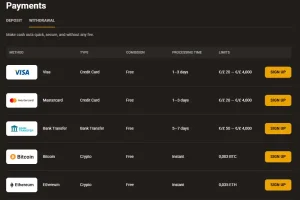
For withdrawals from offshore casino sites, the route can matter as much as the payment provider’s advertised speed. Specialist reviews report that Skrill and Neteller withdrawals are often cleared within 24 hours, with many processed in under 12 hours. E-wallets therefore have the strongest documented case for speed among fiat options. That timing still depends on the casino releasing the payment; a quick method cannot shorten a pending period imposed by the operator.
Bank transfers are the slower comparison. A specialist review reports that they can take five to seven business days, with some casinos adding an internal processing delay before the bank transfer even begins. Treat the overall wait as two stages: the operator’s handling time and the bank’s transfer time. The stated banking timeline does not include every operator’s own queue.
Crypto may be the quickest route on paper. Specialist reviews report that withdrawals can clear in under an hour, faster than fiat methods. The trade-off is volatility: the value of the cryptocurrency can change while you hold it or convert it. A shorter processing time does not necessarily mean a more predictable amount received.
| Route | Reported timing | Main trade-off |
|---|---|---|
| Skrill or Neteller | Within 24 hours; many under 12 hours | Casino processing can still add waiting time |
| Bank transfer | Five to seven business days | Operator delay may extend the wait |
| Crypto | Under an hour | Value can fluctuate |
These figures are reported timings, not a promise for every transaction. Withdrawal limits, pending periods and verification procedures vary by operator, so read the payment terms before choosing a route. An offshore casino is not regulated by the UK Gambling Commission, and it does not provide UKGC-mandated affordability checks. Faster processing does not replace those protections.
If predictability matters more than speed, compare the currency and handling terms as well as the stated timeframe. If speed is the priority, the available reports favour crypto or e-wallets, but each has a different trade-off. No route removes operator discretion.
The Commercial Link Behind One Offshore Operation
A shortlist of foreign casinos can tell you about games or payment methods; it may tell you much less about the commercial relationships behind a brand. Santeda offers a specific example of why those relationships deserve attention.
Santeda operated under a Curaçao licence, but that licence did not authorise it to operate in the UK or the United States. Under its contract with SIS, SIS received a percentage of revenue generated by losing bets placed through Santeda’s brands. The arrangement tied SIS’s income to customer losses, rather than simply to a fixed service fee.
That is a material incentive to understand when assessing an offshore operation. It does not, by itself, establish that every decision was shaped by the contract, or that other offshore casinos use the same model. It does show why a brand name alone may not tell you who benefits financially when customers lose. Look for disclosed ownership and commercial arrangements where those details are available; do not treat a prominent name as a complete account of the business.
Warning: Commercial arrangements, such as revenue-sharing based on customer losses, can create incentives that a brand name alone does not disclose.
For UK players, the regulatory distinction remains important: Santeda’s Curaçao licence did not make it UKGC-regulated. Offshore casinos are not regulated by the UK Gambling Commission and do not offer UKGC-mandated affordability checks. Those facts are separate from the contract, but they belong in the same assessment: licensing describes the operator’s regulatory position, while commercial links can reveal whose interests an arrangement may reward.
The useful comparison is not simply which brands appear at the top of a list. It is what you can verify about the operator, its licensing and the incentives around its business. A ranking cannot answer all three.
GamStop and the Limits of Self-Exclusion
GamStop is designed to apply across UKGC-licensed gambling sites: once you register, those operators must prevent you from using their services for the selected exclusion period. The scheme does not extend to casinos outside the UK Gambling Commission’s remit. That leaves a clear gap for anyone relying on self-exclusion to create distance from gambling.
A specialist review reports that someone who has excluded through GamStop may be able to sign up with a foreign casino and deposit without the safeguards that apply within the scheme. The practical point is not how quickly registration might happen; it is that GamStop cannot block an operator beyond its reach. A new account can therefore undermine the barrier you put in place.
Offshore casinos are not regulated by the UKGC, and they do not provide UKGC-mandated affordability checks. Their exclusion arrangements should not be treated as a substitute for GamStop. If you have self-excluded because gambling is causing harm, opening an account elsewhere may restore access at precisely the moment you intended to restrict it. The gap is real.
Before taking action, consider whether an additional barrier would help: blocking gambling websites or asking your bank about gambling-payment controls may add friction, though neither makes an overseas operator part of GamStop. You can also seek support from a gambling harm service if you are finding it difficult to maintain your exclusion.
Safety & Licensing for UK Online Casinos
The comparison is straightforward: GamStop covers licensed UK operators; it does not cover every site you might encounter. If self-exclusion is meant to protect you, moving to a casino outside the scheme weakens that protection rather than extending it.
Tax and Verification Before You Withdraw
For UK players, gambling winnings are not subject to income tax. That treatment does not change according to whether the casino holds a UK Gambling Commission (UKGC) licence. Tax status, however, is separate from the rules an operator must follow when handling your account.
A UKGC-licensed casino must verify your identity before it processes a withdrawal. This is a regulatory requirement, not an optional extra that applies only when an account looks unusual. If you use a non-UK online casino accepting UK players, do not assume it follows the same process or offers the same protections: offshore operators are not regulated by the UKGC.
That distinction matters when you are planning a cash-out. A UKGC-licensed operator is required to complete identity checks before paying you, while an offshore site’s verification procedures can differ. Read the operator’s terms and check what documents it may request, but remember that checking a policy does not make the site subject to UKGC rules.
Offshore operators also do not provide the UKGC-mandated affordability checks that apply within the British regulatory system. That is a difference in safeguards, not a tax advantage. Your winnings remain outside UK income tax regardless of the operator’s licence status; the operator’s obligations and the protections available to you are another matter.
Keep the comparison simple: tax treatment is the same, but verification duties are not. If the priority is a defined UK regulatory requirement before withdrawal, that criterion points to a UKGC-licensed operator. An offshore site cannot be treated as equivalent just because it accepts British customers. Short distinction, serious consequences.
Are bonuses at foreign casinos actually better than at UKGC-licensed sites?
Foreign casinos often advertise larger welcome offers because they are not bound by UKGC restrictions on bonus terms and promotions. A larger headline offer can still come with substantial wagering requirements, so check the terms before accepting it.
Is it legal for UK residents to use casino sites that operate outside the UK’s licensing framework?
Yes, UK residents are not committing an offence simply by betting with an overseas casino. However, an operator without a UKGC licence cannot legally provide gambling facilities to customers in England, Scotland and Wales.
Can I play at a casino licensed outside the UK?
Yes, playing at an overseas-licensed casino is not illegal for a British player. An offshore licence does not make the operator UKGC-regulated or authorise it to serve UK customers.
What should players check to assess whether an international casino is safe?
Check which regulator, if any, licenses the operator, and whether it holds a UKGC licence to serve British customers. An offshore licence is not a substitute for UKGC regulation; also check whether the site uses encryption to protect your personal and financial information.
How do I know if an online casino is safe?
Check the operator’s licensing status and which regulator issued its licence; a foreign licence does not mean the casino is regulated by the UKGC. Look for security measures such as encryption to protect your data and payments.
How long do withdrawals take at the listed operators?
E-wallet withdrawals commonly take up to 24 hours, and some are processed in under 12 hours. Bank transfers often take five to seven business days, while crypto withdrawals can clear in under an hour; processing times, pending periods and verification requirements vary by operator.
What does wagering requirement actually mean in practice?
It is the amount you must bet on qualifying games before bonus funds can be withdrawn. For example, a 35x requirement on a £20 bonus means £700 in qualifying bets; on a £100 bonus, it means £3,500.
Material created by the team SlotLair