

GAMSTOP covers participating licensed gambling websites and apps in Great Britain; this guide explains how to assess claims and safeguards beyond that scheme.
How GAMSTOP’s UK-Wide Exclusion Works
GAMSTOP is Great Britain’s national online self-exclusion scheme. Its purpose is to apply one exclusion across participating licensed gambling websites and apps, rather than requiring you to contact each covered operator separately. The defining feature is its reach across multiple businesses: when an operator participates, the scheme blocks access to that operator’s online gambling service for people who have self-excluded.
That scope matters if you use more than one online casino or gambling app. A separate request to each business can address individual accounts; GAMSTOP is designed to cover participating operators together. It is therefore a scheme-level tool, not simply a setting within one casino account. Its coverage is also specific: it concerns online gambling websites and apps, rather than every place where a person might encounter gambling.
What “UK-wide” means here
GAMSTOP is the national scheme for Great Britain. In practical terms, the relevant group is licensed online gambling operators covered by the scheme, not every website that can be viewed from a British address. The Gambling Commission made participation compulsory for online operators from 31 March 2020. Since then, UK-licensed operators have been required to block customers who have self-excluded through GAMSTOP.
Online Slots Not on GamStop: What the Label Means
The scheme is described as multi-operator because the exclusion reaches across participating sites and apps. It is not a collection of unrelated account closures that you must arrange one at a time. A single scheme can cover access to multiple licensed online gambling businesses, which is the point of using a national service rather than relying only on an individual operator’s controls.
Coverage is about the operator and its online service. A site’s appearance, name or casino games do not by themselves establish whether it falls within GAMSTOP. The relevant distinction is whether the gambling business is within the participating licensed group that the scheme covers. That keeps the meaning of “UK-wide” precise: broad across covered operators, not a universal block on every gambling site in existence.
How the scheme relates to individual accounts
GAMSTOP operates across participating sites and apps, while an individual casino can also provide its own self-exclusion process. These are different scopes of action. An operator-level request concerns that particular business; GAMSTOP is intended to extend the exclusion across the scheme’s participating online operators.
Safety & Licensing for UK Online Casinos
For a person who has accounts with several covered operators, that distinction can be important. A multi-operator scheme reduces the need to treat each participating casino as an isolated case. It also gives a clearer picture of the boundary: GAMSTOP’s role is to block access across the licensed online gambling websites and apps covered by the scheme, rather than to manage every possible gambling setting or account outside that coverage.
The scheme is not a casino, payment service or general internet filter. Its function is narrower and more specific: self-exclusion from participating online gambling operators. Understanding that boundary helps avoid treating the service as if it automatically changes access to every gambling product or every website a person might find.
A practical way to read its coverage
When you are assessing whether an online gambling service is within GAMSTOP’s scope, focus on the regulatory and scheme relationship rather than the label used in its advertising. The established UK arrangement is that licensed online operators must participate, and that GAMSTOP blocks access across participating licensed sites and apps. The scheme’s reach is therefore tied to covered operators, not to whether a website describes itself as a casino or offers familiar games.
This also explains why the phrase “UK-wide” should not be read as “every online casino worldwide.” GAMSTOP is a national scheme for Great Britain’s online gambling market, with coverage across the participating licensed operators in that market. That is a meaningful breadth, but it is still a defined one.
For a reader comparing a UK-licensed casino with an online Curacao casino, the first useful point is simply what the UK scheme does cover: participating licensed online gambling websites and apps. A casino’s location or licence claim is a separate question from the scope of GAMSTOP, and the scheme’s UK-wide reach should not be stretched into a claim about every site with an international audience. The boundary is the covered operator network. No wider inference is needed.
What “Not on GAMSTOP” Means for a Curacao Casino
If you’re looking into non-GamStop Curaçao casino sites in 2026, payout timing is one practical detail to check. This list gives you the stated withdrawal timeframe for each operator.
1. Revery Play
Payout speed: 1-3 business days Revery Play lists a payout speed of 1–3 business days, giving you a stated timeframe to consider.
2. Zombillion
Payout speed: 1-3 business days Zombillion lists a payout speed of 1–3 business days, which gives you a clear indication of its stated timing.
3. SpinFormula
Payout speed: 1-3 business days SpinFormula lists payouts as taking 1–3 business days, a useful detail for your withdrawal planning.
4. Jetsetspins
Payout speed: 1-3 business days Jetsetspins lists a payout speed of 1–3 business days, so you have a stated timeframe to bear in mind.
5. EvoSpin
Payout speed: 1-3 business days EvoSpin lists a payout speed of 1–3 business days, providing you with a specific timing detail.
6. NightWin
Payout speed: 1-3 business days NightWin lists payouts as taking 1–3 business days, giving you a timeframe to factor into your plans.
7. Chanze
Payout speed: 1-3 business days Chanze lists a payout speed of 1–3 business days, a stated detail you can consider when reviewing your options.
8. Britsino
Payout speed: 1-3 business days Britsino lists payouts as taking 1–3 business days, giving you a stated expectation for timing.
9. WinBeast
Payout speed: 1-3 business days WinBeast lists a payout speed of 1–3 business days, which may help you assess the stated withdrawal timing.
10. NightLuck
Payout speed: 1-3 business days NightLuck lists payouts as taking 1–3 business days, providing you with a stated timeframe.
“Not on GAMSTOP” describes a relationship with a self-exclusion scheme; it does not, by itself, tell you everything about a casino. In particular, seeing a Curacao reference beside a casino’s name does not prove whether that operator participates in GAMSTOP, what licence it holds, or what self-exclusion arrangements it offers.
GAMSTOP is designed to prevent registered players from accessing their existing gambling accounts or opening new ones with online gambling operators across the UK. Participation became compulsory for online operators from 31 March 2020. The scheme’s reach is therefore tied to the operators covered by it, rather than to every gambling website that might be reachable online.
That distinction is central when you see a site described as a Curacao casino not on GAMSTOP. The phrase may indicate that the site is not covered by the scheme, but it is not independent confirmation of the operator’s status or practices. Nor does it tell you whether the site has effective account controls, whether it offers its own self-exclusion process, or how it handles a request from someone who has excluded themselves elsewhere.
Attention: A label like "not on GAMSTOP" is not independent confirmation of an operator’s status, licensing, or the availability of effective account controls.
A name, a logo or a marketing label is not a substitute for checking the actual operator and the terms presented to you. “Curacao” is not, by itself, evidence that a particular casino is outside GAMSTOP, just as the phrase “not on GAMSTOP” does not establish what protections are available on that site. Those are separate questions. Treating them as one answer is a poor comparison.
What the label does—and does not—tell you
GAMSTOP applies across participating online gambling operators, so registering is not simply a request to close one account. It is intended to stop access across the covered operators and prevent new accounts with them. A site outside that coverage would not be blocked by GAMSTOP in the same way. But that limited point does not establish the identity, licensing status or exclusion policy of any particular Curacao-branded casino.
The distinction also matters if you are already excluded. A website’s apparent availability does not mean that gambling there is consistent with the terms of your self-exclusion. If you signed an agreement with a gambling business or used a multi-operator scheme, going elsewhere to get around the restriction could breach the commitment you made. Do not open another account as a way to work around an exclusion.
Non-GamStop European Casinos: UK Rules Explained
The word “best” adds no useful evidence unless you define the criterion. If you mean the best choice for maintaining an exclusion, the relevant test is whether the site is covered by the restriction you registered for—not whether its branding sounds reassuring. If you mean the quality of its safeguards, that would require clear, site-specific information about those safeguards. A broad label cannot supply either answer.
It is also worth separating visibility from coverage. A site appearing in a list of non-GAMSTOP Curacao casinos does not establish that its operator has checked your exclusion status, that it will refuse your custom, or that it will support you in maintaining a break from gambling. Equally, a claim that a site is not on GAMSTOP is not proof that there is no way to self-exclude directly with that business. The scheme and an individual operator’s own process are different things.
For a reader comparing Curacao casinos said to be outside GAMSTOP, the sound starting point is modest: ask what the label specifically means, and do not treat it as a finding about the site’s protections. The fact that GAMSTOP covers participating operators does not turn every site outside its reach into a suitable alternative. Nor does being outside the scheme erase an existing self-exclusion agreement.
No Permission
If you have excluded yourself, do not use the uncertainty of a casino’s status as a reason to gamble elsewhere or create another account.
The key distinction is scope. GAMSTOP blocks access across the online operators covered by the scheme; the phrase “not on GAMSTOP” does not, on its own, verify a particular casino’s status or terms. If you have excluded yourself, do not use that uncertainty as a reason to gamble elsewhere or create another account. A label is not permission.
The Risks of Gambling Outside Your Exclusion
Self-exclusion is a formal agreement: you ask a gambling business to stop you betting with it for a set period, and it must refuse service at the venues or on the websites you excluded yourself from. The boundary matters. An agreement with one business does not, by itself, mean you have excluded yourself from every place where gambling is available.
That distinction can become important when you are considering a Curacao casino that is not covered by GAMSTOP. The phrase describes a gap in the exclusion’s reach; it does not make gambling there a safe way to continue. If you have agreed not to gamble, using a different site to get around that commitment could breach its terms. Do not open another account elsewhere to work around an exclusion.
The agreement depends on your choices
An exclusion can only protect you at the businesses or venues included in it. If you have excluded yourself from one gambling website, that does not automatically cover another website, a betting shop or a casino. The practical question is not simply whether a particular site is blocked. It is whether you have excluded yourself from every place where you may be tempted to gamble.
British Casinos Not on GamStop: UK Rules Explained
Make that list broadly: online accounts, local venues and any other gambling businesses you might turn to when an urge arises. Then use the relevant self-exclusion arrangements for each. A person who is excluded from one venue will be refused service there; that protection should not be mistaken for a universal barrier elsewhere.
This is especially relevant if you are searching for Curacao casinos not registered with GAMSTOP, or wondering whether a Curacao site is affected by your exclusion. The important personal risk is the same: if that business is outside the agreement you made, you may still be able to access it, but access is not permission to disregard your commitment. The agreement remains yours to follow.
Access is not a safeguard
A site may appear available when a business you excluded from is not. That difference can make it tempting to treat an uncovered account as a loophole. It is not a dependable safeguard against gambling, and the availability of a payment method or an account does not change the terms of your exclusion. Looking for another route can move the decision back into your hands at the moment the agreement was meant to help.
Self-exclusion is not an automatic control over every gambling service. It is a commitment with a defined scope, and the player is responsible for sticking to it. If you are still drawn to gambling after excluding yourself, add each place that could become an alternative to your exclusion plan rather than testing whether it will let you play. A wider boundary is more useful than a technical gap.
Do
- Make a broad list of all online accounts and local venues
- Use relevant self-exclusion arrangements for every identified place
- Add new temptations to your exclusion plan
Don’t
- Treat an uncovered account as a loophole
- Use different sites to get around a commitment
- Test whether a site will let you play if you are excluded
Losses are not refunded
Do not treat a regulator as a way to reverse a decision to gamble outside your exclusion. The UK Gambling Commission cannot refund money you have spent gambling. A complaint or later realisation that you should not have played does not turn losses into recoverable funds.
That makes the decision before depositing more consequential than any hope of putting things right afterwards. If you have already excluded yourself, pause rather than opening an account at a different casino, including one described as not part of GAMSTOP. The fact that a site may not block you does not cancel the agreement you made with another business.
For a practical check, write down every place where you could be tempted to gamble and ask whether your exclusion covers it. If it does not, take steps to exclude yourself there too. The aim is not to find the boundary and cross it; it is to make the boundary wide enough to support the decision you have already made. A loophole is still a choice.
Curacao Licence Claims and the UK-Gambling Boundary
A Curacao licence claim and a UK Gambling Commission licence answer different questions. A reference to a Curacao licence, including one associated with Curacao eGaming, does not by itself establish that an operator is authorised to serve customers in Great Britain. Nor does it establish whether GAMSTOP applies to that operator.
Trusted casinos not on GamStop UK: checks and limits
The relevant UK boundary is based on where the operator offers gambling, not simply where it is based. Remote gambling businesses selling into the British market must hold the appropriate UK Gambling Commission licence, regardless of their location. A foreign licence claim is not a substitute for that UK authorisation. The label on a website is not the same thing as permission to serve British customers.
GAMSTOP operates within this UK framework. Players can use it to exclude themselves from gambling with UK-licensed online casinos. Once registered, they are blocked from UKGC-licensed gambling platforms for the selected exclusion period. The practical criterion is therefore UKGC licensing and GAMSTOP coverage—not whether a site describes itself as Curacao-licensed.
That distinction matters when assessing a Curacao casino licence list or trying to check a particular claim. A list of offshore licence holders would not, on its own, tell you whether each business holds a UKGC licence, may lawfully serve British customers, or participates in GAMSTOP. Those are separate questions. Treating one licence claim as proof of all three would collapse the regulatory boundary into a marketing label.
Non-UK Registered Casinos: Licences and Risks
The same caution applies to the phrase “Curacao-licensed casino.” It may describe a licence claim, but it does not establish that a UK player can rely on the protections tied to UK regulation. A licence from outside the UK does not turn an operator into a UKGC licensee, and it cannot be used as evidence that GAMSTOP blocks access to its accounts.
For a reader comparing regulatory status, keep the checks distinct:
- UK authorisation: Does the operator hold the relevant UK Gambling Commission licence to offer remote gambling to British customers?
- GAMSTOP: Is the operator within the UK-licensed online gambling system covered by the scheme?
- Offshore claim: What does the stated Curacao licence actually establish, and what does it leave unanswered about access from Great Britain?
The first two concern the UK system. A Curacao licence claim alone cannot answer them. If you have registered with GAMSTOP, do not treat an offshore licence label as a reason to open another account or as confirmation that the exclusion applies there. The licensing boundary and the exclusion boundary are related, but they are not interchangeable.
A useful comparison is not a longer list of licence names. It is a clear distinction between a UKGC licence, which is required for remote gambling operators selling into the British market, and an offshore licence claim, which does not establish UK authorisation or GAMSTOP coverage. That is the regulatory line to keep in view.
Compare Safety by the Protections You Can Verify
“Best” only means something once you choose the protection you care about. If your priority is preventing further gambling, compare the self-exclusion process. If you want to manage spending, look at the financial-limit controls. If you are checking whether an account can be opened responsibly, consider when age is verified. These are different criteria, not interchangeable signs of safety.
Responsible comparison involves looking at both the stated policy and the practical controls available to the customer.
Gambling businesses must offer customers a way to self-exclude. They must also take reasonable steps to prevent a person who has excluded themselves from gambling with them. That is a meaningful obligation, but it is not a promise that every attempt to gamble will be stopped in every circumstance. A responsible comparison therefore looks at both the stated policy and the practical controls available to the customer.
For UK-licensed operators, age verification must happen before a customer can deposit funds into a gambling account. New customers must also be prompted to set a financial limit before making their first deposit, and account-level limit controls must be accessible. These are specific UK requirements. They give you concrete points to check rather than relying on a general claim that an operator takes safety seriously.
| Criterion | What the UK requirement establishes |
|---|---|
| Self-exclusion | Gambling businesses must offer it and take reasonable steps to prevent excluded customers from gambling |
| Age checks | A customer’s age must be verified before deposits are allowed |
| Financial limits | New customers must be prompted to set a limit before their first deposit, with accessible controls in the account |
These requirements help define a comparison for UK-licensed gambling businesses. They do not establish that a particular Curacao casino has the same protections, nor do they verify the operation of a named site. A Curacao reference in a casino’s branding or description is not evidence of how its exclusion process works or whether its account controls function as claimed.
So if you are weighing Curacao casinos for UK players, avoid treating “best” as a universal ranking. The more useful question is which protections you can actually confirm, and whether they match the risk you are trying to manage. A clear policy should explain how self-exclusion is requested and what happens to an excluded account; usable controls should be visible before you deposit, not buried behind vague assurances. Where those details cannot be established, do not assume UK requirements apply.
There is no single winner across every safety criterion. The relevant comparison depends on your need: exclusion, age checks, or spending controls. Separate what is required of UK-licensed operators from what a particular offshore site says about itself. A label is not a safeguard.
Safety Comparison
- Prioritize verifiable protections over general rankings or “best” labels
- Ensure self-exclusion instructions are clear and usable
- Verify that account-level financial limit controls are accessible
- Distinguish between UKGC requirements and offshore site claims
Bitcoin and Crypto Payments: What This Guide Can Confirm
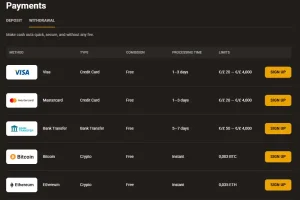
A search for Bitcoin casinos in Curaçao may bring together three separate questions: whether a particular casino accepts Bitcoin, what licence it operates under, and whether it can lawfully serve customers in Great Britain. A payment option cannot answer the other two. Bitcoin acceptance, where offered, would describe a way to pay; it would not by itself establish a casino’s licence or the protections available to you.
The same distinction applies to searches for crypto casinos or Curaçao-licensed crypto casinos. A label combining a location, a currency and a licence claim is not proof that a particular operator has all three characteristics. Check each claim separately. Do not treat the word “crypto” as a regulatory status, or a payment logo as evidence that a gambling business is authorised to serve the British market.
Separate the payment method from the operator
Before comparing any payment option, identify what the operator says it accepts and which entity would receive the funds. A payment method might be described as Bitcoin, another cryptocurrency, a card, a bank transfer or a digital wallet; those terms are not interchangeable. Nor does a method’s appearance on a cashier page establish who controls the account, what rules apply to a transaction, or what recourse you would have if a dispute arose.
For a Curaçao casino, do not infer that Bitcoin is available simply because the casino is described as crypto-friendly. Equally, the presence of a Bitcoin option would not establish that the operator holds a particular licence. Those are separate details to verify against the operator’s own terms and the relevant regulator’s information.
A useful comparison table would therefore keep the questions in separate columns:
| Question | What it tells you |
|---|---|
| Which payment methods are expressly listed? | The operator’s stated payment options |
| Which company operates the casino? | The entity responsible for the gambling service |
| What licence is claimed, and who issued it? | The operator’s stated regulatory basis |
| Is the operator authorised to serve Great Britain? | Whether it meets the UK regulatory requirement |
A match in one column does not fill in the others. A Bitcoin logo is not a licence.
The established UK restriction
Remote gambling operators must not accept credit cards for gambling. The rule also covers credit-card funds routed through a money service business: changing the route does not make the underlying credit-card funding acceptable.
There is a related restriction for wallets. Operators cannot accept wallet payments where the wallet allows credit-card funds to be used for gambling. The relevant question is not merely whether a payment is called a wallet transfer; it is whether credit-card money can fund gambling through that wallet.
These restrictions are useful when comparing payment arrangements because they concern the funding route, not the branding of a cashier option. A card, intermediary or wallet description should not be read as permission to use credit borrowed through a credit card for gambling. If the source of funds is unclear, do not assume that a different payment label changes the rule.
That is a narrower point than a general endorsement of any other payment method. The credit-card restriction does not establish that Bitcoin or another cryptocurrency is accepted by a particular casino, nor does it confirm that a crypto payment is protected in the same way as a UK-regulated gambling transaction. Payment mechanics and gambling regulation remain different questions.
UK Credit Card Restrictions
Remote gambling operators must not accept credit cards for gambling, including funds routed through money service businesses or wallets that allow credit-card funding.
Keep the comparison precise
If you are considering a site that advertises Bitcoin, focus first on the operator and its regulatory status rather than the appeal of the payment option. Then read the site’s payment terms directly. Look for the exact method named, any stated conditions, and the company that handles the transaction. Do not assume that a casino described as operating from Curaçao has a particular licence, or that a licence claim alone confirms UK authorisation.
For UK players, the boundary is straightforward: a payment method does not replace the requirement for a remote gambling operator serving Great Britain to hold the relevant UK Gambling Commission licence. Bitcoin does not create an exception to that requirement. The same distinction applies to other crypto assets.
The strongest comparison is therefore not “Bitcoin versus card” in isolation. It is whether the operator is authorised for the market, what payment route it actually offers, and whether that route complies with the UK restriction on credit-card-funded gambling. Keep those checks separate. A payment option is only one part of the picture.
Paysafecard, Payment Safety and the Limits of the Evidence
A Paysafecard option should not be assumed to be available at a Curacao casino. There is no confirmed information establishing whether any particular site accepts it, or whether a specific payment route is safe. A payment logo, if displayed, would not by itself establish how the transaction is processed or what protections apply.
That distinction matters because the payment method’s name does not tell you whether a wallet or intermediary is involved, how funds reach the gambling account, or what rules govern the operator. Do not treat a Paysafecard listing as proof that a Curacao casino has been checked against UK payment safeguards. Nor does the payment method establish that a site is suitable for you.
Non-Gamban Casinos in the UK: What Status Means
For UK-licensed casinos, the relevant rules are more specific. They cannot accept credit cards for gambling. Remote gambling operators must also refuse wallet payments where the wallet allows credit-card funds to be used for gambling. These restrictions address the source of the money, not merely the label shown at checkout.
The restriction also covers credit-card funding routed through a money service business. Changing the route does not make credit-card gambling payments acceptable for remote operators. That is a useful comparison when assessing payment claims: a method may look separate from a card, while the underlying funds still matter.
These are UK safeguards, not evidence about the arrangements at an unnamed Curacao site. You cannot infer that a site applies the same restrictions from its use of Paysafecard, or from the presence of a wallet or payment intermediary. Equally, the absence of a named method from a site’s displayed options does not establish what other routes it may offer. The specific operator and payment process would need to be verified.
For a practical comparison, separate three questions: is the payment method actually offered; what route do the funds take; and which rules apply to the operator serving you? If those details are unclear, do not treat the transaction as safe simply because Paysafecard appears in the payment information. A familiar payment name is not a substitute for evidence about the site or the route.
The UK rule is clear for licensed casinos: credit cards cannot be used to fund gambling, directly or through a wallet that permits credit-card funds for that purpose. It does not certify a payment option elsewhere. No shortcut there.
Attention: The presence of a payment logo like Paysafecard does not establish that a site is safe or that it complies with UK payment safeguards.
Trustly and Gambling Without GAMSTOP
Trustly is a payment question, not a self-exclusion option. Whether a particular Curaçao casino accepts Trustly depends on that operator; the payment method alone does not show whether a site is part of GAMSTOP or whether an exclusion applies. It should not be treated as a way to get around a block.
If you have self-excluded, do not open an account elsewhere to continue gambling. Playing at a non-GAMSTOP casino could breach the terms of your exclusion. A different cashier or bank-payment route does not change that. The practical distinction is simple: payment services move money, while self-exclusion is a request to stop gambling with participating businesses or a particular operator.
For online gambling, you can register with GAMSTOP, which lets you self-exclude from participating online operators through one request. Alternatively, you can contact an individual online casino and ask it to exclude you. These options address access to gambling; neither is a payment method, and Trustly should not be confused with either.
If a payment question is the reason you are considering a Curacao casino, separate it from the decision about your exclusion. Check the payment details with the operator rather than assuming Trustly is available. More importantly, do not use payment availability as a reason to create another gambling account while an exclusion is active. That would not resolve the underlying restriction.
The relevant comparison is not which cashier might work, but which self-exclusion route matches where you may be tempted to gamble. If you need exclusion across participating online operators, consider GAMSTOP. If you need to exclude yourself from one online casino, contact that business directly. A payment label cannot replace either step.
Choosing a Casino by Its Actual Safeguards
A useful comparison of Curacao casinos starts with the safeguards you can inspect, not a claim that one is “top”. The right choice depends on what matters to you; clear self-exclusion steps and practical account controls are concrete criteria.
Casinos That Bypass GamStop: Risks and Rules
Before opening an account, look for a Responsible Gambling or Safer Gambling page that explains how to exclude yourself. If the instructions are not clear, contact customer services and ask how to self-exclude from that website or app. Do not treat a vague responsible-gambling label as proof that the process is usable.
Account controls matter too. Remote gambling operators must prompt new customers to set a financial limit before their first deposit and make account-level limit controls accessible. Check whether you can find those controls and understand how to use them before depositing. A safeguard that is hard to locate is a weak comparison point.
These checks help you assess what a site presents, but they do not establish that a particular Curacao casino provides those features or how effectively it applies them. Do not infer protection from a casino’s ranking, branding or licence claim. Compare only what the operator clearly explains, and avoid opening an account if you cannot establish how its safeguards work.
A table keeps the comparison honest: record whether exclusion instructions are easy to find, whether customer services can explain the process, and whether financial-limit controls are accessible. The stronger option on these criteria is the one with clear, usable controls—not simply the one described as a top casino.
How to Register for GAMSTOP and What Happens Next
Register directly with GAMSTOP. You will be asked for personal details so your identity can be verified, then you can choose an exclusion period. The available periods are six months, one year or five years. Once your registration is confirmed, the exclusion takes effect.
To end an exclusion, you must contact GAMSTOP directly and request removal. Identity verification is required, followed by a 24-hour cooling-off period during which your exclusion remains active. There is no expedited option. You can cancel the removal request during that period by contacting GAMSTOP and asking to keep the exclusion in place.
After GAMSTOP processes a removal, it may take operators a further 24 to 48 hours to update your status.
How does self-exclusion work?
You identify the gambling sites or venues you want to exclude yourself from, verify your identity, choose an exclusion period and receive confirmation. For online gambling, you can use GAMSTOP for participating operators or contact a single casino; for a land-based casino, ask staff at the venue.
How do I return from self-exclusion?
You must contact GAMSTOP directly to request removal. A 24-hour cooling-off period applies to every request, and after removal is processed, operators may take a further 24 to 48 hours to update your status.
How does GAMSTOP benefit me?
GAMSTOP lets you block access to your existing accounts and prevent new accounts across participating UK-licensed online gambling operators with one free registration. This avoids having to arrange exclusions with each covered operator separately.
How long does it take for GAMSTOP to become active after sign-up?
The 24-hour cooling-off period starts once your identity has been verified, and your exclusion remains active during that period.
How does a non-GAMSTOP casino handle self-exclusion?
You can request self-exclusion from an individual casino through its Responsible Gambling or Safer Gambling page, or by contacting customer services. After an agreement is made, the business must close your account, return your funds, remove your details from marketing databases and take reasonable steps to prevent you from gambling there.
Material created by the team SlotLair