

A casino’s named licence identifies its regulator, but does not by itself show that the operator is authorised to serve customers in Great Britain.
What “Non-UK Registered” Means—and Which Licences You May See
“Non-UK registered” is often used to describe an online casino whose regulator is not the UK Gambling Commission (UKGC). More precisely, the key distinction is regulatory oversight: a non-UK-regulated casino operates without UKGC supervision. It may hold a licence from another jurisdiction, but that licence is not a UKGC licence and does not make the site regulated in Great Britain.
The wording can be misleading. “Registered” may sound like a simple entry on a list, whereas a gambling licence concerns which authority supervises an operator. When you compare sites, identify the regulator named in the operator’s terms and licence information. The country or territory associated with that licence tells you which jurisdiction’s rules apply to the operator; it does not, by itself, establish that the operator is authorised to serve customers in Great Britain.
| Jurisdiction named in licence information | How it fits the term |
|---|---|
| Malta | A jurisdiction commonly associated with non-UK-regulated casinos |
| Curaçao | A jurisdiction commonly associated with non-UK-regulated casinos |
| Gibraltar | A jurisdiction commonly associated with non-UK-regulated casinos |
| Anjouan | A jurisdiction commonly associated with non-UK-regulated casinos |
If you’re considering non-UK-registered casinos in 2026, payout timing is one practical detail to check before choosing where to play. Use this list as a reference for the stated withdrawal speed of each operator.
1. Revery Play
Payout speed: 1-3 business days Revery Play lists a payout speed of 1–3 business days, giving you a stated timeframe to consider.
2. Zombillion
Payout speed: 1-3 business days Zombillion lists a payout speed of 1–3 business days, giving you a stated timeframe to consider.
3. SpinFormula
Payout speed: 1-3 business days SpinFormula lists a payout speed of 1–3 business days, giving you a stated timeframe to consider.
4. Jetsetspins
Payout speed: 1-3 business days Jetsetspins lists a payout speed of 1–3 business days, giving you a stated timeframe to consider.
5. EvoSpin
Payout speed: 1-3 business days EvoSpin lists a payout speed of 1–3 business days, giving you a stated timeframe to consider.
6. NightWin
Payout speed: 1-3 business days NightWin lists a payout speed of 1–3 business days, giving you a stated timeframe to consider.
7. Chanze
Payout speed: 1-3 business days Chanze lists a payout speed of 1–3 business days, giving you a stated timeframe to consider.
8. Britsino
Payout speed: 1-3 business days Britsino lists a payout speed of 1–3 business days, giving you a stated timeframe to consider.
9. WinBeast
Payout speed: 1-3 business days WinBeast lists a payout speed of 1–3 business days, giving you a stated timeframe to consider.
10. NightLuck
Payout speed: 1-3 business days NightLuck lists a payout speed of 1–3 business days, giving you a stated timeframe to consider.
The names in the table identify places whose licensing may appear in this context; they do not mean that every operator based there has the same status, or that a foreign licence is interchangeable with a UKGC licence. The relevant criterion is the regulator responsible for the operator, not the wording used in an advert or the location suggested by a website address.
Licence location is not UK authorisation
For customers in Great Britain, the regulatory test concerns the service being supplied, not just where a company is based. An operator serving customers there must hold a UK Gambling Commission licence regardless of its headquarters or the foreign licence it may also hold. A licence issued elsewhere therefore does not replace the required UKGC authorisation for serving the British market.
That distinction matters when you encounter a non-UK registered online casino describing itself as licensed. The statement may refer to a real licence in another jurisdiction, but it does not mean that the UKGC oversees the casino. Nor does the appearance of a foreign regulator’s name settle whether the operator is authorised to provide gambling services to customers in Great Britain. These are separate questions, and the regulator’s identity is the useful starting point.
The phrase “casinos not registered in the UK” is also sometimes used loosely for sites that are not under UKGC oversight. It should not be read as a formal category that proves a casino has no licence anywhere. Some sites may be licensed outside the UK; others may not have a licence that provides meaningful oversight. The distinction is between UK regulation and regulation elsewhere, not simply between a UK address and a foreign one.
Non-UKGC Licensed Casinos: Licences and Risks
The law focuses on operators
The Gambling Act 2005 addresses operators supplying gambling services into the UK market. It does not make an individual player’s use of a gambling service licensed in another country a criminal offence. UK law does not expressly forbid British citizens from using gambling services licensed abroad. Those points concern the player’s legal position; they do not turn a foreign-licensed site into a UKGC-regulated casino or establish that it is authorised to serve Great Britain.
So, if you see “online casinos not registered in the UK,” read the phrase as a prompt to check the regulator, not as a verdict about safety or quality. Likewise, “new” says nothing on its own about regulatory status, and “best” depends on the criterion you care about. A site might be described as not registered with GamStop, but that phrase refers to a different distinction from whether the UKGC regulates it. The terms are often placed side by side, but they are not synonyms.
For a clear comparison, keep three details separate: the operator’s base, the jurisdiction named on its licence, and whether it holds UKGC authorisation to serve customers in Great Britain. The first two describe connections to a company and its regulator; the third addresses UK oversight. One label cannot do all three jobs.
A non-UK-regulated casino operates without UK Gambling Commission (UKGC) supervision, regardless of whether it holds a licence from another jurisdiction.
That is the useful dividing line: a non-UK-regulated casino is outside UKGC supervision, even where another jurisdiction has issued a licence. A foreign licence may explain which regulator the operator names, but it is not a substitute for UK authorisation. Check what the label actually refers to. A name is not a licence.
Casinos Outside GamStop: What That Means for Your Protection
A casino outside GamStop is not connected to the UK Gambling Commission’s self-exclusion scheme. If you have registered with GamStop to block your access to participating gambling sites, that registration does not extend to a casino operating outside the scheme. A site may be described as serving UK customers, but that wording does not make it part of GamStop or give you the protections attached to the UK system.
This distinction matters most if you are using self-exclusion to stop gambling, rather than simply taking a short break. A casino not registered with GamStop should not be treated as a way to make a GamStop exclusion work differently: it sits outside that scheme. The block cannot be assumed to cover it.
What the protection gap looks like
Self-exclusion is useful only when it applies to the services you can access. At a casino outside GamStop, the central UK scheme cannot enforce your exclusion. The site is also outside the UK Gambling Commission’s mandatory responsible-gambling tools, so you should not expect the same system of protections that applies at UKGC-regulated operators.
British Casinos Not on GamStop: UK Rules Explained
That does not mean every operator has identical policies. It means you cannot rely on the UK scheme to set or enforce them. A site might describe its own limits or account controls, but an operator’s voluntary arrangements are not the same thing as a common UKGC requirement. Check the actual terms before relying on any tool—and do not assume that a control offered by one site will apply elsewhere.
For someone who has self-excluded because gambling is becoming difficult to manage, that gap is practical, not technical. A new account or a different brand does not make the underlying risk disappear. If your aim is to prevent access, a site outside GamStop may undermine that aim rather than support it.
A different system.
Responsible-gambling tools are not equivalent by default
At UKGC-licensed casinos, mandatory responsible-gambling tools form part of the regulated framework. Non-UK-regulated sites may have less stringent responsible-gambling rules, and players at offshore casinos forfeit access to the mandatory tools available through the UK system. The important comparison is not whether a site displays a responsible-gambling page; it is whether the protections you need are present, usable and enforceable.
The same caution applies to deposit controls and self-exclusion options. Do not assume that a casino outside GamStop offers safeguards equivalent to those required in the UK, or that a limit will prevent further gambling across other sites. If you are seeking an effective barrier, an operator’s own feature is not a substitute for exclusion through the UK scheme.
Protection Gap
A casino outside GamStop cannot enforce your self-exclusion through the central UK scheme, which may undermine your aim to prevent access if gambling is becoming difficult to manage.
Data protection and recourse
Protection also involves how a casino handles personal information. Non-UK-regulated casinos may operate under less stringent data-protection rules than UKGC-licensed operators. That does not establish how any particular site will use or secure your data, but it does mean that UK-level requirements should not be presumed. Before registering, read the privacy information and consider what personal details the site asks you to provide.
There is also a difference in where you can seek help if something goes wrong. When you gamble at an offshore casino, you do not have access to the UK’s Financial Ombudsman Service or the mandatory responsible-gambling tools provided under the UK framework. The UK Gambling Commission’s protections are not a fallback for an operator outside its system. That can leave you with fewer routes to address a problem than you would have at a UKGC-licensed site.
“Reputable” is therefore not a substitute for checking the protection in place. A polished website, familiar payment branding or a confident claim about customer care does not establish that GamStop applies, that UK tools are available, or that the operator follows UK-level data-protection rules. Judge the site by the specific safeguards it explains, not by the impression created by its presentation.
If you are looking for a particular kind of site
Whether you are considering a Curaçao-licensed site, a casino that mentions PayPal, or one advertising Boku payments, the payment brand or licensing location does not tell you whether the casino participates in GamStop. Treat these as separate questions. A payment method cannot restore self-exclusion coverage, and a familiar brand name does not establish UK regulatory protection.
Non-GamStop European Casinos: UK Rules Explained
If you have already excluded yourself through GamStop, the safest reading is straightforward: casinos outside the scheme are not covered by that exclusion. If you are trying to stop gambling, avoid treating a casino outside GamStop as a workaround. If you are comparing sites for another reason, establish which protections are actually available before depositing, and be clear that they may not match the UK system.
Payments and Withdrawals: Methods, Limits and Delays
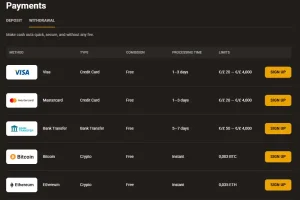
When comparing casino sites not registered in the UK, separate the deposit route from the withdrawal route. A payment method shown at the cashier may be available for funding an account without being available for cashing out. Check both directions before depositing, along with any conditions attached to the method. A familiar logo is not a promise that money can travel both ways.
Deposits: different routes, different checks
Non-UK-regulated casinos may offer credit cards, e-wallets, bank transfers and cryptocurrency, sometimes using payment processors other than those familiar from UK-registered casino sites. Which options appear can vary between operators and may change. The practical comparison is not simply how many methods are listed: it is whether you can use the route you intend to deposit with and whether the operator permits withdrawals through it.
Crypto has a specific distinction in the UK context: it can bypass the UK ban on gambling funded by credit cards. That describes how the payment route works; it is not an endorsement or a reason to assume a crypto deposit will be easier to retrieve. Before choosing it, establish how the casino handles withdrawals and whether the same currency and account can be used in both directions. If the withdrawal route differs, you may need to understand that process before money is in play.
Attention: The use of cryptocurrency can bypass the UK ban on gambling funded by credit cards, but it does not guarantee that deposits will be easier to retrieve.
A specialist review has also reported casinos where a deposit can be charged to a mobile phone bill or taken from a prepaid balance. Treat that as an option reported in an individual review, not a standard feature across the market. If you encounter it, read the cashier details carefully: the presence of an unusual deposit route says nothing by itself about payout availability.
Withdrawals: published times are not a guarantee
Payment speed is one area where accounts of non-GamStop casinos conflict. Some descriptions put withdrawals at roughly 24 hours to five business days, depending on the payment method; other accounts say that a payout can take three or four weeks. Those are materially different expectations, not a single reliable timetable. The operator’s displayed estimate may help you plan, but it should not be treated as a guaranteed arrival date.
The longer estimate matters because there is no regulatory clock to enforce a payout deadline in the way a customer might expect from a UK-regulated service. A delay can therefore leave you relying on the operator’s own process and communications. Before making a deposit, look for the stated processing stages: whether a request is reviewed first, when it is marked as sent, and whether the estimated time refers to the casino’s handling or the payment provider’s transfer. If those stages are unclear, the advertised speed is a weak basis for comparison.
VPN-Friendly Casinos in the UK: What to Know
A more lenient deposit or withdrawal policy may mean fewer restrictions or a faster payout in some cases. It does not establish that every transaction will be quick, or that every payment method will be treated alike. Your comparison should give more weight to clear, method-specific withdrawal information than to broad claims about fast cash-outs. The quickest route on a deposit page may not be the most straightforward route when you want to withdraw.
A practical comparison before depositing
Use the same checklist for each casino site not registered with GamStop that you are considering:
| Check | What to establish |
|---|---|
| Deposit options | Which methods are actually available to you? |
| Withdrawal options | Can the chosen method also receive a payout, or is another route required? |
| Timing | Is the estimate specific to the method, and what stages does it cover? |
| Currency and account details | Are the withdrawal requirements clear before you deposit? |
| Limits or restrictions | Are any conditions stated for the payment route or payout request? |
Do not infer an operator’s payout policy from the fact that it accepts a particular deposit. Nor does a new casino site not registered with GamStop become a better choice simply because its cashier lists more options. “Best” depends on the criterion: if you prioritise a clear cash-out process, precise withdrawal information matters more than a long menu of deposit methods.
The same checks apply if you are comparing slot sites not registered with GamStop or looking at a site described as not registered with Gamban. Those labels do not tell you how payments work. Focus on the cashier’s actual terms, the route available for withdrawals and the difference between a stated estimate and an assured payment date. For a money decision, clarity beats choice.
Live Casino Offers and Bonus Terms: Read the Conditions First
A live table offer can look more generous than it is if you compare only the headline amount or number of spins. For a useful comparison, separate the offer into its conditions: what must be wagered, which games count, when the offer expires, and what can be withdrawn. The same checklist applies whether you are considering a welcome bonus, a free-spin package or an offer attached to live casino play.
Do
- Check if live casino games are eligible for the bonus
- Review how live game play contributes toward wagering
- Read the full offer terms and conditions
Don’t
- Assume a bonus advertised beside a live table applies to all games
- Rely on the headline amount without checking conditions
- Accept an offer without verifying the wagering calculation
Do not assume that a bonus advertised beside a live table can be used on every live game. Read the offer terms to see whether live casino games are eligible and, if they are, how their play is treated towards wagering. If the wording is unclear, the headline does not settle the question. A bonus that cannot be used on the games you intended to play may have little practical value.
Work out what the wagering figure applies to
A wagering requirement tells you how much qualifying play is required before bonus-related winnings can be withdrawn. The multiplier alone is not enough: the base amount matters too. The terms may calculate wagering against the bonus, the deposit and bonus together, or another stated combination.
A specialist review has reported offshore welcome offers with wagering requirements of 35 times or more. Treat that as a prompt to inspect the particular offer, not as a standard that applies to every casino. Specialist reviews have also described offers with a 40-times requirement calculated in different ways: on the bonus alone, on the deposit and bonus combined, or on the bonus and free spins together. Those differences change the amount of qualifying play required, so check the calculation before accepting.
For a live casino offer, also look for the game contribution rules. The terms should make clear whether live games count towards wagering and whether they count in the same way as other games. If the offer excludes live games, or gives them a different contribution, that may make completion slower than the headline multiplier suggests. Do not treat a general bonus description as a substitute for the offer’s full conditions.
Free spins have their own limits
Free spins can be tied to particular games, an expiry window and a cap on the winnings that can be withdrawn. A specialist review has described packages that expire within 24 to 72 hours; that timing should not be assumed for a different offer. Check when the clock starts and whether unused spins disappear when the period ends.
The same kind of review has reported free-spin winnings subject to wagering of 30 to 50 times the winnings, alongside withdrawal caps of £5 to £50. These are reported terms, not universal limits. The specific offer must state whether winnings are withdrawable, whether wagering applies, and what cap—if any—restricts a cash-out. A large-looking spin package can therefore produce a much smaller withdrawable amount.
Attention: Some non-UK-regulated casinos may impose daily, weekly, or monthly cash-out limits, meaning large wins might only be withdrawable in instalments.
Read expiry and withdrawal terms together
Expiry conditions can apply separately to the spins, the bonus balance and the time allowed to complete wagering. Check each one. If a package expires before you can use it, or the wagering period ends before you meet the requirement, the offer may be removed under its terms. Keep a copy or screenshot of the conditions shown when you accept; a page can change, and the version you saw matters.
Withdrawal terms deserve equal attention. A specialist review has reported that some non-UK-regulated casinos set daily, weekly or monthly cash-out limits, which can mean withdrawing a large win in instalments. Do not assume such limits apply everywhere, but look for them in the cashier and bonus conditions. Also check whether accepting an offer changes withdrawal eligibility or imposes additional verification before payment. A specialist review has described requests such as notarised documents or video calls in some cases; these are not established requirements across the market, but they illustrate why withdrawal rules should be read before depositing.
Compare the terms, not the label
A practical comparison table can keep the decision grounded:
| Criterion | What to check |
|---|---|
| Game eligibility | Whether live casino games qualify and how they contribute |
| Wagering basis | Which balance or winnings the multiplier applies to |
| Expiry | When spins, bonus funds and wagering periods end |
| Withdrawal | Any cap, instalment rule or offer-related condition |
| Verification | What documents or checks may be requested |
There is no single “best” offer without a criterion. If you value flexibility, an offer with clear eligibility and no restrictive cash-out condition may compare better than one with a larger headline. If you mainly want live play, the deciding point is whether those games qualify under the terms—not how prominently the bonus is displayed. Read the conditions on the device you use, including a mobile screen where small print can be easy to miss. The fine print is doing real work.
Anjouan Licences: What the Framework Does—and Does Not—Require
An Anjouan casino licence is not permission to operate in every market. It does not authorise an operator to serve customers in the United Kingdom or in other markets listed as restricted. A licence displayed on a casino’s website therefore does not, by itself, establish that the operator may legally offer gambling to you where you live.
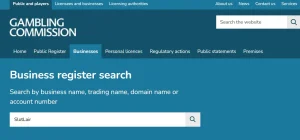
Before considering an operator, compare its licence details with the public register. Check that the entry is current, note the expiry date and make sure the registered company name matches the business named on the casino site. A mismatch or an expired entry is a reason to pause, not a minor paperwork wrinkle. These checks can help confirm whether the stated licence corresponds to the operator; they do not expand what the licence permits.
What the framework does not require
The limits matter as much as the existence of a licence. Anjouan’s framework does not require casinos to have their random number generators tested, undergo audits or keep player funds separate from company funds. That means the licence alone does not establish that games have been independently tested or that your balance is ring-fenced if the operator fails.
Financial Risk
Anjouan’s framework does not require operators to keep player funds separate from company funds; if the operator becomes insolvent, you may be an unsecured creditor.
Player funds are not guaranteed to be segregated under this framework. If the operator becomes insolvent, you may be an unsecured creditor rather than someone whose funds are held separately for repayment. A licence check cannot remove that financial risk.
Anjouan-licensed casinos are also not required to connect to GAMSTOP or provide an independent alternative dispute resolution process comparable to services approved by the UK Gambling Commission. The presence of an Anjouan licence should not be read as evidence that either safeguard is available. Terms on an operator’s own site may describe its internal processes, but that is not the same as an independent route.
A practical check before you proceed
Use the register as a verification step, not as a recommendation. Check the licence status, expiry date and company-name match, then read the operator’s own terms to identify the entity you would be dealing with. If the details are unclear or inconsistent, do not assume that a badge or certificate image settles the question.
This distinction is especially important when a site presents a foreign licence as reassurance for British customers. An Anjouan licence does not authorise UK operation, and it does not bring the operator within the UK regulatory system. The deciding criterion is not whether a licence logo appears, but whether the licence entry matches the operator and what protections that framework actually requires.
A checked entry is a starting point, not a safety guarantee.
Gamban and Offshore Casinos: Do Not Confuse It with GamStop
Gamban and GamStop are not interchangeable. A question about whether a casino is covered by Gamban concerns one thing; whether it is part of GamStop concerns another. Casinos outside GamStop are not included in the UK Gambling Commission’s self-exclusion scheme. That does not, by itself, establish whether a particular site is covered by Gamban.
The phrase “not registered with Gamban” can also suggest that casinos sign up to a formal operator register. Do not use it as a shortcut for judging a casino’s licence or regulatory status. A site’s relationship to a blocking tool does not tell you which regulator oversees it, while its absence from GamStop tells you only that it is outside that scheme.
What to check
If you use Gamban and want to know whether it covers a particular casino, check Gamban’s own current information rather than relying on a site’s marketing or an old third-party list. Coverage can be product-specific and may change; do not assume that every non-UK-regulated casino is blocked, or that a site is safe to use because you can access it.
If you are looking for self-exclusion, check the scheme itself. GamStop applies to participating UK-licensed operators; it is not a universal block on every gambling site. A non-GamStop casino sits outside that UKGC scheme, so a GamStop exclusion should not be treated as protection from access to it.
GamStop applies specifically to participating UK-licensed operators, whereas Gamban is a separate blocking tool. A site’s absence from one does not automatically dictate its status with the other.
There is a separate consideration: non-UK-regulated casinos may apply less stringent responsible-gambling and data-protection rules than operators licensed by the UK Gambling Commission. A blocking tool and a self-exclusion scheme therefore cannot be treated as substitutes for understanding the operator’s regulatory position and the safeguards it provides.
Different checks. If gambling is causing harm, avoid testing a site’s accessibility as a way to assess protection. Use the relevant service’s own guidance and seek support from a recognised gambling-support organisation.
UK-Registered Casinos: The Regulatory Difference
“UK-registered casino” is often used to mean a casino authorised to serve players in Great Britain. The decisive detail is not where the operator’s company is incorporated or where its offices are based. It is whether the operator holds a licence from the UK Gambling Commission (UKGC) for the gambling services it provides.
That distinction matters when comparing sites. An operator based overseas may still need a UKGC licence if it serves customers in Great Britain. Conversely, a company’s registration in the UK does not, by itself, show that its casino operation is licensed by the Commission. The relevant criterion is regulatory authorisation for the service, not the address on a company record.
A UKGC-licensed casino is therefore different from a non-UK regulated casino in the regulator overseeing its operation. The latter operates without UKGC oversight. A foreign licence may identify the jurisdiction that regulates an operator, but it does not replace the UKGC licence required for serving the British market.
For your comparison, check the operator and the specific gambling service named in its UKGC licence. A familiar brand name or a UK-facing website is not proof of authorisation. Nor is a licence from another jurisdiction equivalent to permission to serve customers in Great Britain. Keep the test simple: does the UKGC licence cover this operator and its casino service?
Safety & Licensing for UK Online Casinos
This is a regulatory distinction, not a claim that every licensed site will suit every player. The relevant advantage, if your priority is UK oversight, is that the operator falls within the British licensing system. If your priority is something else, the winner depends on that criterion; a company’s location alone settles nothing.
“UK-registered” can be imprecise wording, then. In practical terms, look for UKGC authorisation rather than relying on the label or the operator’s base. Two different checks.
Trust and Complaints: What Happens When a Dispute Arises
When you assess whether a non-UK-registered casino is trustworthy, separate the operator’s own complaints process from independent oversight. A written procedure may tell you how to raise an issue, but it does not mean an outside body will review the outcome.
For an Anjouan-licensed casino, the operator must respond to a complaint within 30 calendar days under the framework. That is a response deadline, not a promise that the dispute will be settled in your favour or resolved within that period. Keep copies of your messages and any relevant account records, and note when you submitted the complaint so you can track whether the operator replies.
The Anjouan authority does not handle, mediate or decide complaints from players. If the casino rejects your case, gives an unsatisfactory answer or fails to engage, you cannot ask that authority to adjudicate the disagreement. Anjouan-licensed casinos also do not offer an independent dispute-resolution route comparable to the services approved for UK Gambling Commission-licensed operators. That leaves a substantial gap between making a complaint and having an independent party examine it.
Recourse Test
The true measure of a casino’s trustworthiness in disputes is whether an independent party can review the operator’s decision, rather than just the existence of an internal complaints process.
This distinction matters when considering casinos not registered with GamStop. GamStop status does not tell you who will resolve a dispute, and a casino’s licence should not be treated as evidence that an independent complaints service is available. For an Anjouan-licensed operator, check the complaint process before opening an account: identify where complaints must be sent, what information the operator asks for and how it says it will respond. These details can make the process clearer, but they do not create external recourse.
A useful comparison criterion is therefore not simply whether a casino accepts a complaint, but whether someone independent can review the operator’s decision. If that route is absent, your options after an unresolved complaint are more limited. “Trusted” needs a test. For disputes, that test is recourse—not reassuring wording on a site.
Malta-Registered Casinos in the Wider Offshore Market
A Malta registration places a casino within one part of a wider international licensing landscape. Malta is among the jurisdictions that may license online casinos operating outside the UK Gambling Commission’s oversight; Curaçao, Gibraltar and Anjouan are also associated with this market. The label identifies a licensing jurisdiction, not UK regulation.
For you, the useful comparison is therefore not simply Malta versus another place name. First establish which regulator issued the operator’s licence, then distinguish that from whether the operator holds the UK authorisation required to serve customers in Great Britain. A Malta-registered casino is not, on that description alone, a UK-licensed casino.
The jurisdiction name also cannot settle every practical question about an individual site. It does not, by itself, tell you which rules apply to a particular account, what terms the operator imposes or how a dispute would be handled. Those details need to be assessed against the operator and its stated licence, rather than inferred from the words “Malta-registered”.
A compact comparison helps:
| Check | What it tells you |
|---|---|
| Licensing jurisdiction | Which authority the operator says oversees it |
| UK Gambling Commission authorisation | Whether it is regulated for serving the British market |
These are separate criteria. Malta may appear in the same broad group as other jurisdictions associated with non-UK-regulated casinos, but that grouping does not make their frameworks interchangeable. Nor does a Malta connection establish UKGC oversight. The better fit depends on the regulatory status you need—not on the jurisdiction name alone.
Curaçao Casino Sites Outside GamStop: Licence and Market Context
Curaçao is one of several jurisdictions associated with non-UK-regulated casinos. Malta, Gibraltar and Anjouan are also among the places that may issue licences to operators outside the UK Gambling Commission’s oversight. The jurisdiction named on a site’s licence describes its regulatory context; it does not, by itself, establish that the site is part of a UK scheme.
GamStop membership is a separate matter. Casinos not on GamStop are not included in the UK Gambling Commission’s self-exclusion scheme. So a Curaçao-licensed site may also be outside GamStop, but the two descriptions are not interchangeable: one refers to a licensing jurisdiction, the other to participation in a self-exclusion service.
That distinction matters when you assess a site. A Curaçao connection alone does not tell you whether a particular operator accepts customers in Great Britain, what terms apply, or what safeguards it provides. Do not treat the jurisdiction name as a complete assessment of the operator, and do not assume that a licence elsewhere gives a site UK authorisation.
If you are considering a non-UK-regulated casino, check the operator’s own terms and the applicable local rules before using it. You are responsible for understanding the legal and practical implications of accessing gambling services licensed abroad. A location label is not a guarantee.
What happens if I have a dispute with an Anjouan-licensed casino as a UK player?
You can complain to the operator, which must respond within 30 calendar days, but Anjouan does not mediate or decide player complaints. These casinos are not required to offer an independent dispute-resolution service comparable to UKGC-approved ADR.
What payment methods work best at non-UK-regulated casino sites?
Offshore casinos may accept credit cards, e-wallets, bank transfers and cryptocurrencies, sometimes through alternative processors. Some also allow deposits through a mobile phone bill or prepaid balance; the available methods depend on the casino.
What payment options are available at non-UK casinos?
Options may include credit cards, e-wallets, bank transfers and cryptocurrencies, sometimes through alternative processors. Some casinos also accept deposits charged to a mobile phone bill or deducted from a prepaid balance.
Are sites that are not on GamStop legal for players in the UK to access?
UK law does not explicitly prohibit you from using gambling services licensed in another country, and players do not commit a criminal offence by gambling on an unlicensed site. However, an operator serving customers in Great Britain must hold a UK Gambling Commission licence, and a foreign licence does not replace it.
Are gaming sites not on GamStop permitted for UK players?
UK law does not explicitly prohibit you from using gambling services licensed abroad, and players do not commit a criminal offence by gambling on an unlicensed site. But operators serving customers in Great Britain must hold a UK Gambling Commission licence; being outside GamStop does not provide that authorisation.
Material created by the team SlotLair