

The phrase “USA casino” does not establish an operator’s location, licensing status or whether it accepts customers in Britain.
What “USA Casinos” Means for UK Players
“USA casinos” can sound like a precise description: casinos based in the United States, operating under American rules and open to customers in Britain. For a UK reader, though, the phrase is often used more loosely. It may point to an overseas casino that accepts British customers, without establishing where the operator is based or which authority licenses it.
That distinction matters because location, licensing and access are separate questions. A casino’s name or American styling does not, by itself, show that it is a US-based business. Nor does the word “USA” establish that the operator holds a licence from a US authority. The label alone cannot settle either point.
Read “USA” as a clue, not a credential
People looking for an American online casino from the UK may be trying to find a site with a particular identity or feel. But a US-facing name, imagery or wording is not proof of the operator’s location. It is also not proof of the operator’s regulatory status.
If you’re exploring USA casinos as a UK player in 2026, payout timing is one practical detail to consider. Use this list as a starting point and check each casino’s terms before deciding.
1. Revery Play
Payout speed: 1-3 business days Revery Play lists a payout speed of 1–3 business days, giving you a stated timeframe to consider.
2. Zombillion
Payout speed: 1-3 business days Zombillion lists a payout speed of 1–3 business days, which gives you a clear stated timeframe for payouts.
3. SpinFormula
Payout speed: 1-3 business days SpinFormula lists a payout speed of 1–3 business days, a useful detail for you to weigh when reviewing the casino.
4. Jetsetspins
Payout speed: 1-3 business days Jetsetspins lists a payout speed of 1–3 business days, giving you a stated expectation for payout timing.
5. EvoSpin
Payout speed: 1-3 business days EvoSpin lists a payout speed of 1–3 business days, so you have a stated timeframe to factor into your choice.
6. NightWin
Payout speed: 1-3 business days NightWin lists a payout speed of 1–3 business days, providing you with a stated payout timeframe.
7. Chanze
Payout speed: 1-3 business days Chanze lists a payout speed of 1–3 business days, a practical timing detail for you to keep in mind.
8. Britsino
Payout speed: 1-3 business days Britsino lists a payout speed of 1–3 business days, giving you a stated timeframe to consider.
9. WinBeast
Payout speed: 1-3 business days WinBeast lists a payout speed of 1–3 business days, so you can factor that stated timing into your review.
10. NightLuck
Payout speed: 1-3 business days NightLuck lists a payout speed of 1–3 business days, giving you a stated indication of payout timing.
The same applies to descriptions such as “US-friendly” or “American casino”. They may be used to describe a site’s intended audience or presentation; they do not certify that British customers are authorised to use it, or that it is licensed in the United States. Those details need to be considered separately.
For this guide, a foreign casino means an online gambling operator that accepts British customers without a licence from the UK Gambling Commission. Such operators are licensed offshore and are not regulated by the UKGC. That definition is about the operator’s relationship to the British market, not its branding or whether it is actually American.
| What the wording suggests | What it does not establish |
|---|---|
| “USA casino” | That the operator is based in the United States |
| “American online casino” | That it holds a US gambling licence |
| “USA-friendly” | That access for British customers is clearly authorised |
| “Foreign casino” in the UK context | That the operator is regulated by the UKGC |
The key criterion is the operator’s regulatory status in relation to the UK, not how convincingly its website presents an American identity. An offshore licence and a UKGC licence are not interchangeable descriptions: the former does not make an operator regulated by the latter.
Separate identity from availability
A site can be described in American terms while the practical question for a UK player is whether it accepts British customers. That is a question about availability, not geography. A casino’s stated market, its branding and its actual position on British customers should not be treated as the same thing.
This distinction also helps make sense of phrases such as “USA casinos for UK players”. The wording can refer broadly to overseas gambling sites that British customers may encounter, rather than to casinos physically located in the US. It should not be read as a guarantee that a particular site is American, holds an American licence or is open to UK residents.
Best International Casinos for UK Players: What to Check
The converse is equally important: a casino does not become a US casino merely because it accepts customers from Britain. The UK-facing definition of a foreign casino concerns acceptance of British customers and the absence of a UK Gambling Commission licence. It does not identify the country in which the business is established.
Why the label can mislead
Search results and casino descriptions often compress several ideas into a short phrase. “Top USA casinos”, for instance, might sound like a ranking of American operators, while a reader may actually be trying to understand overseas sites available to people in Britain. Without separating those meanings, the label can make unlike operators appear comparable.
A more useful way to read the wording is to ask what kind of claim it makes:
- Location: Is the operator actually based in the United States?
- Licensing: Which authority licenses the operator, if any is identified?
- UK status: Does the operator hold a UK Gambling Commission licence?
- Customer access: Does the operator state that British customers may use its service?
These are distinct checks, not different ways of asking one question. A claim about location does not answer the licensing question, and an offshore licence does not mean UKGC regulation. Likewise, a description aimed at British customers does not, on its own, establish that access is permitted by the operator.
If you are comparing foreign casinos under an American label, compare like with like: establish what the label refers to before treating it as a meaningful category. The deciding criterion depends on what you want to know. For an operator’s geographic identity, look for its stated location; for its UK regulatory status, the relevant distinction is whether it holds a UKGC licence. The word “USA” answers neither by itself.
Keep the categories separate. Branding is not regulation.
The UK Legal Position in 2026
The key legal distinction is between what a casino operator is allowed to do and what an individual player is allowed to do. For customers in England, Scotland and Wales, an online gambling business offering its services must hold the relevant licence from the UK Gambling Commission (UKGC). A licence issued overseas does not replace that requirement.
Attention: An overseas licence does not replace the requirement for an operator to hold a UK Gambling Commission licence to legally offer services in Great Britain.
This means that “licensed abroad” and “licensed to serve the British market” are not interchangeable descriptions. An operator may hold authorisation in another jurisdiction, but that does not, by itself, permit it to offer gambling services to customers in Great Britain. The UKGC licence is the relevant permission for an operator serving this market.
The operator’s obligation
Under the Gambling Act 2005, online gambling sites without a Gambling Commission licence cannot legally offer their services in England, Scotland and Wales. The obligation falls on the operator: a business that provides gambling facilities to customers in these nations must hold the appropriate UK licence.
That rule applies whether the operator is based in Britain or elsewhere. Location does not remove the licensing requirement. So a casino described as a USA casino, an overseas casino or an offshore casino should not be assumed to have permission to serve British customers simply because it operates from another country or holds a foreign licence.
For the same reason, calling a site “legit” does not settle the UK legal question. The word might refer to the operator’s status under another country’s rules, or it may be a broad marketing description. Neither establishes that the operator holds a UKGC licence. The relevant criterion is specific: does the operator have permission from the UK Gambling Commission to offer gambling services in Great Britain?
This is an operator-side rule, not a statement that every foreign business is automatically authorised to serve British customers. Nor does a foreign licence bring an operator within the UKGC’s regulatory system. Offshore casinos are not regulated by the UKGC, and they do not provide the UKGC-mandated affordability checks that apply to licensed operators. A foreign licence and UK regulatory oversight are different things.
The player’s legal position
The position of the individual is different. There is no law in the United Kingdom that makes it illegal for a British player to place a bet with an overseas casino. Playing at a casino licensed outside the UK is not, in itself, an offence for the player. The Gambling Act does not impose a criminal penalty on a UK resident merely for using a foreign casino.
While an operator may be acting unlawfully by offering services without a UKGC licence, there is no law making it illegal for a British player to place a bet with an overseas casino.
That distinction can be easy to miss. If a site is not entitled to offer gambling services to British customers, that concerns the operator’s conduct. It does not follow that the customer commits a crime by placing a bet. The legal responsibility described here rests on the business offering the service, not on an individual simply using an overseas operator.
This does not turn an overseas casino into a UK-licensed one, or mean that its foreign authorisation has the same status as a UKGC licence. It only separates two questions that are often blurred together: whether the operator may legally offer services in Great Britain, and whether the player is committing an offence by gambling with it. The answer to the first depends on UK licensing; the answer to the second is no, on the basis of playing at an overseas casino alone.
Applying the distinction to USA-branded casinos
For someone considering a USA-branded casino, the word “USA” does not determine the UK legal position. A label, theme or claimed connection to the United States tells you nothing decisive about UKGC authorisation. The legal test remains whether the operator holds a Gambling Commission licence to serve customers in Great Britain.
Nor does the player’s lack of criminal liability change the operator’s obligations. It would be a mistake to read “players are not prosecuted for placing bets with overseas operators” as “the operator is legally entitled to serve UK customers”. Those are separate propositions. The first concerns the individual; the second concerns the business.
Gibraltar Casino Licence: UK Rules Explained
The same distinction applies when a casino describes itself as new, safe or legitimate. Those terms do not answer the licensing question. If the operator lacks a UKGC licence, it is outside the UKGC’s regulatory framework, even if it holds a licence elsewhere. A foreign permit may matter under the rules of the place that issued it, but it is not permission to provide gambling services in Great Britain.
For a UK player, the practical legal takeaway is therefore narrow but important: using an overseas casino is not itself a criminal offence, while an operator offering gambling services to customers in England, Scotland or Wales must hold a UKGC licence. The player’s position and the operator’s position should not be collapsed into one verdict. Different questions. Different duties.
When a Foreign Casino Accepts UK Players
A casino’s website opening from the UK does not, by itself, mean the operator has authorised British customers. The distinction matters: technical access is not the same as permission to register, play or receive the service under the operator’s own rules.
Some overseas casinos state that they do not accept customers from Britain or are expected to block access from here. Yet gambling.com has reported that some such sites do not enforce that restriction consistently, and that a basic VPN may allow users to get around an access block. This is a report about the gap between stated restrictions and what can happen online—not proof that any particular American-branded casino accepts UK players.
Access is not authorisation
You may be able to open a site, view its games or reach a registration page while in Britain. That establishes only that the page is reachable at that moment. It does not establish that the operator has agreed to serve you, or that your account will remain available if the operator later identifies your location.
Do
- Check the operator’s written terms for accepted countries
- Look for explicit location restrictions
- Verify if the UK is listed as an excluded territory
Don’t
- Assume technical access means authorised access
- Treat a working registration form as a green light
- Rely on a reachable website as proof of permission
The operator’s terms are the first place to check. Look for the countries it accepts, any location restrictions, and what it says about accounts registered from excluded places. If the wording excludes the UK, a working website or an open registration form should not be treated as an exception. A site can leave pages visible while still reserving the right to restrict an account under its stated rules.
That distinction also helps when assessing claims about US casinos accepting UK players. “US” may describe a brand, a theme or an operator’s claimed connection; it does not show that the business has permission to serve customers in Britain. Nor does the fact that a site can be reached from a British connection prove that it is based in the United States. Read the access terms, not the label.
Why access can change
Location controls are not always applied in the same way at every point of a customer journey. A site may appear accessible at first and apply a restriction later, or its stated policy may not match what a visitor sees at the time. A VPN can also change the location a site detects, but using one to get around a block does not turn prohibited access into authorised access.
This creates a practical uncertainty for anyone trying to work out whether a USA casino site accepts British customers. A successful visit, an account form or even the ability to proceed through a page is not a dependable substitute for clear written confirmation from the operator that UK residents are permitted. If the terms are unclear, treat that as unresolved—not as a green light.
Merkur Casino Online UK: Games, Demos and Checks
The operator’s position is the relevant criterion. A casino that explicitly excludes British customers is not a suitable choice simply because its website happens to load. If it does not explain its territorial rules clearly, you cannot confidently establish that your access is authorised. The page may work; the permission may not.
What the restriction means in Britain
The legal distinction is between the customer’s access and the operator’s conduct. In Great Britain, an operator offering gambling facilities to UK customers without the required UK Gambling Commission licence is acting unlawfully. That does not make a site’s technical availability evidence of lawful permission to serve the British market.
A list of countries in its terms, an explicit UK exclusion, and any location-related account conditions are more useful indicators than a search result, a brand name or the simple fact that a page opens. Where the operator’s own wording rules out Britain, do not infer acceptance from access.
Be cautious about treating silence as consent. An incomplete country list or vague wording does not tell you whether British residents are welcome; it leaves the operator’s position uncertain. A clear restriction is clearer still: if the site says UK customers are excluded, a VPN or an unblocked page does not remove that restriction.
Access Risk
Using a VPN to bypass an access block does not turn prohibited access into authorised access under the operator’s rules.
A practical availability check
Before relying on access, check the operator’s country restrictions and account terms directly. Look for language that identifies the UK or Great Britain, and note whether the restriction applies to registration, continued use or particular services. If the terms conflict with what the site allows you to do, the operator’s written rules matter more than a temporary technical opening.
Do not mistake a broad claim such as “international players welcome” for confirmation that British customers are accepted. The useful answer is specific: the operator must not exclude UK residents in its stated rules. Where you cannot find that answer, availability remains uncertain.
For the same reason, a directory or review describing a site as accessible from Britain cannot settle the question on its own. Access can depend on the operator’s controls and may change; the operator’s published position is the better test of whether you are permitted to use the service. A working page is not a promise.
Deposits, Payout Reliability and the Limits of a Review
A payment method can suit your budget and still tell you little about whether a casino will honour a withdrawal. For a UK player assessing a site marketed as an American casino, separate three checks: whether the payment route works for you, whether the withdrawal rules are understandable, and what protection exists if a payout is disputed. A strong result on the first check does not settle the others.
Start with the written terms, not a banner promising fast payouts or a welcome offer. Look for the operator’s stated withdrawal limits, any pending period, and the identity checks it may require. These conditions differ considerably between operators, according to a specialist casino review. If the rules are hard to find, leave key steps unexplained, or appear inconsistent across the site, that uncertainty is itself relevant to your decision.
Casino Without a UK Licence: Rules for Great Britain
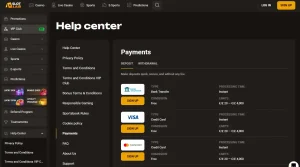
Then assess payment fit. Check that the listed deposit and withdrawal routes are available to you, and whether the operator explains how a withdrawal is returned. A method that accepts deposits is not necessarily the method you can use to receive funds. Do not assume that a familiar payment brand, a polished cashier page or a short processing claim is proof that the operator is dependable.
The same distinction matters when reading claims about “trusted” casinos or sites with fast payouts. A review can compare published terms and describe what an operator says about its process; it cannot guarantee that a future claim will be accepted or that a withdrawal will be paid. Speed and reliability are different tests. A quick stated process is of limited value if the operator can later dispute eligibility or apply conditions you did not notice.
There is a more serious risk than delay. Gambling.com has reported cases in which unlicensed sites refused to pay winnings, leaving customers without legal recourse. That report is not proof that every offshore casino will do this, but it is a reason not to treat an attractive offer or positive review as a substitute for enforceable protection.
Offshore casinos are not regulated by the UK Gambling Commission, so they do not provide the protections available through UKGC oversight. They are also not subject to UKGC-mandated affordability checks. If a disagreement arises over a withdrawal, you cannot assume that the UK regulator can resolve it as it could for a licensed operator. The practical question is not simply whether a site lists a licence elsewhere; it is what route, if any, you would have to challenge its decision.
Caution: Offshore casinos are not regulated by the UKGC and do not provide mandated affordability checks or the same legal recourse for disputed withdrawals.
A useful comparison table should therefore give payment fit and terms clarity their own columns, rather than collapsing them into one “payout” score. Mark whether withdrawal conditions are easy to locate, whether limits and verification are explained, and whether the site clearly states how a payment dispute is handled. If a review cannot verify a point, treat it as unverified—not as a pass.
For a £5 deposit, a no-deposit offer, or a large welcome package, the same standard applies: first establish what the payment and withdrawal rules actually say. The amount required to enter does not measure the reliability of a payout. Better on access is not better on recourse.
American Casino Connections and Conflicts of Interest
A reference to American casinos can make a commercial connection sound like proof that a site is American. It is not. Santeda’s licence is from Curaçao, and that licence does not authorise it to operate in either the UK or the US. The relationship between Santeda and SIS is a separate matter: it concerns how revenue was shared, not where Santeda was licensed.
Under their contract, SIS received a percentage of revenue generated by losing bets placed through Santeda’s brands. That detail matters because it identifies a financial interest in gambling activity. It does not, by itself, establish that SIS owned or operated those brands, that a particular casino was safe, or that it was suitable for a UK customer. Those are different questions, and a commercial link is not an answer to them.
Online casino Malta MGA licence and UK rules
The distinction is useful when you read USA casino reviews aimed at British players. A review may mention an American connection, a business partner or a shared commercial arrangement. Before treating that as a trust signal, identify what the connection actually describes. A revenue-sharing contract is evidence of a commercial relationship; it is not a licence, a regulator’s approval or independent confirmation of how a site handles customers.
The same standard applies in reverse. A disclosed commercial interest does not automatically prove that a casino is unsafe or that a review is inaccurate. It does, however, give you a reason to separate promotional language from verifiable information. Ask what the named party did, what the agreement covered and whether the claim being made follows from those details. If the evidence only establishes a revenue share, it cannot support a broader assurance about safety.
This is particularly important when a page presents itself as a guide to American casino sites for UK players. “American” may refer to a search topic or a business association, but it cannot override the licensing facts. Nor does a relationship with an industry company turn a Curaçao licence into permission to operate in the United States or Britain. Labels are cheap; the scope of an agreement is more useful.
For comparisons, keep separate columns for licensing, commercial relationships and the evidence offered about the casino itself. A connection may help explain who has a financial interest in a brand. It cannot tell you whether the site is appropriate for your circumstances, and it should not be treated as a substitute for checking the operator’s status or the terms that apply to you. The best American casino is therefore not identified by a business tie alone: the relevant criterion depends on what you are trying to establish.
A commercial connection or revenue-sharing agreement is evidence of a financial relationship, not a substitute for a gambling licence or regulatory approval.
That is the whole point of the disclosure. It makes an incentive visible; it does not settle the wider question of trust. A revenue share tied to losing bets is a material detail, but it is not a verdict on every brand in the arrangement. Commercial connection is evidence of connection. Nothing more.
How to Compare Entry Costs and Account Requirements
A low advertised minimum deposit is only one part of the entry cost. Before opening an account, compare the amount the casino says it will accept with the payment method you intend to use. The cashier’s terms should make clear whether that method has its own minimum, and whether a deposit must be made before you can use a particular feature. If the information is unclear, treat that as a reason to pause rather than guess.
For a lower-cost starting point, focus on the amount you are prepared to risk, not simply the smallest figure shown on a promotion. A small deposit does not make an account low-risk, and an offer can have conditions that affect whether funds are withdrawable. Read those conditions separately before deciding; the headline deposit threshold does not explain the full cost of taking part.
Check the account steps before paying
Compare the registration process as well as the deposit options. You should expect to provide identification when required, and the operator must verify your age before allowing you to deposit. Check which documents it requests, how you submit them and whether the account details you enter match your identification. Incomplete or inconsistent information can complicate account checks.
Next, choose a payment method that suits your circumstances. The available options may include cryptocurrency, but availability alone does not establish that a method is suitable for you. Consider whether you understand how it works and whether you are comfortable using it. Do not send money until you have read the operator’s deposit instructions and checked that the method is accepted for your account.
A practical comparison table can keep the decision focused:
| Criterion | What to check |
|---|---|
| Minimum deposit | The amount stated for your chosen payment method |
| Account details | Whether the registration information matches your identification |
| Verification | What identification is requested and when |
| Payment choice | Whether the method is accepted and suitable for you |
| Terms | Any conditions attached to deposited or promotional funds |
One point matters across the checklist: a casino outside the UK Gambling Commission’s system is not regulated by the UKGC and does not provide UKGC-mandated affordability checks. An orderly sign-up process is not a substitute for those protections. The better choice depends on your priority—lower initial cost, familiar payment options or a clearer account process—and none removes the need to assess the risks before depositing.
Free Spins, Bonus Terms and Self-Exclusion
Bonus offers at casinos outside the UK market can take several forms. A specialist review of non-GamStop casinos identifies deposit matches, free-spin packages, no-deposit bonuses and cashback as common formats. The label tells you little about the value: the qualifying rules determine what, if anything, you can later withdraw.
A deposit match adds bonus funds alongside your deposit. Free spins provide spins subject to the offer’s rules, while a no-deposit promotion does not require an initial payment. Cashback returns a portion of eligible losses under conditions set by the operator. For each offer, check which games qualify, whether winnings from spins are capped, when the promotion expires and whether the bonus can be declined. Terms vary; the headline is not the whole offer.
Common Bonus Formats
- Deposit match: Bonus funds added alongside your deposit.
- Free spins: Spins provided subject to specific offer rules.
- No-deposit bonus: A promotion that requires no initial payment.
- Cashback: A return of a portion of eligible losses under set conditions.
What wagering requirements mean
A wagering requirement sets how much qualifying betting must take place before bonus funds—or winnings linked to them—become withdrawable. A specialist review illustrates the arithmetic with a £20 bonus carrying a 35x requirement: the player would need £700 in qualifying bets. That is turnover, not a promise of profit or a target that makes the offer worthwhile.
Check whether the requirement applies to the bonus alone or to the bonus and deposit together. Also look for game exclusions and any maximum bet while a bonus is active. If the terms are unclear, you cannot reliably calculate the amount of play required. A larger match can therefore be less attractive than a smaller offer with clearer, lighter conditions.
Self-exclusion is a separate issue
GamStop applies to UK Gambling Commission-licensed operators. Registering excludes you from every UK-licensed site covered by the scheme; casinos operating outside the Commission’s remit do not participate. A specialist review reports that a person who has self-excluded may still be able to register with a foreign casino and deposit, without the safeguards attached to UK self-exclusion.
That access is not a continuation of your GamStop protection. If you used self-exclusion to stop gambling, do not treat a non-GamStop account as a harmless workaround or as an equivalent safety net. Bonus offers do not change that distinction. The deciding criterion is not the size of the promotion, but whether opening an account would undermine the boundary you set.
How Long Withdrawals Can Take
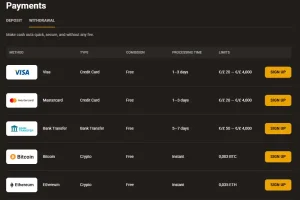
“Instant” and “same-day” are not interchangeable with a completed withdrawal. A payment method may move funds quickly once a casino releases them, but the operator’s own review and processing steps can add time. Compare the full stated timeline, including any pending period, rather than relying on the label attached to a payment option.
E-wallets such as Skrill and Neteller are often the quicker fiat route. Available reporting says most foreign casinos clear these transactions within 24 hours, with many doing so in under 12 hours. That is not a promise for every operator or account: check whether the published estimate starts when you request a withdrawal or after the casino approves it.
Bank transfers tend to take longer. A specialist review reports timelines of five to seven business days, and notes that some casinos add their own processing delay before the bank transfer begins. Business days matter: a request made near a weekend or public holiday may not follow the same calendar as an instant payment. Look for separate estimates for operator approval and the bank’s part of the transfer.
E-wallets
Often the quickest fiat route, with many foreign casinos clearing transactions in under 12 to 24 hours.
Bank Transfers
Typically take five to seven business days, potentially including additional operator processing delays.
Cryptocurrency
Often the fastest method, frequently clearing in under an hour, though subject to currency value fluctuations.
Crypto may appear fastest on the clock. A specialist review reports that crypto withdrawals at foreign casinos often clear in under an hour, faster than fiat methods. But speed is only one comparison criterion: the value of the cryptocurrency can change while you hold it, so the amount received in pounds may differ from its value when the withdrawal was requested.
For a fair comparison, record the method, the operator’s stated processing stage, and the expected time after release. Also check whether identity verification is required before a withdrawal can be processed; verification can affect timing. Do not treat a headline estimate as a guarantee. Offshore casinos are not regulated by the UK Gambling Commission and do not provide UKGC-mandated affordability checks. The quickest stated route may suit a reader prioritising speed; someone who wants a predictable sterling amount may prefer to weigh the exchange risk and the operator’s handling time first. No single method wins on every criterion.
What a Casino Review Can—and Cannot—Verify
A review can report what a casino says about its licence, security and account safeguards. That is not the same as proving that those claims have been independently tested or that the operator offers protection equivalent to a UKGC-licensed casino.
Some specialist reviews describe non-GamStop casinos as using encryption to protect personal and financial information, and say that many hold licences from other authorities. Treat those as claims to check, not a blanket assurance about every site. A review should identify the stated regulator and licence details clearly; the presence of a licence claim alone does not establish the quality of oversight or the practical help available if a dispute arises.
The key distinction is regulatory status. Offshore casinos are not regulated by the UK Gambling Commission, and they do not provide UKGC-mandated affordability checks. A polished website, secure connection or stated offshore licence does not change either point.
Safety & Licensing for UK Online Casinos
When assessing a review, separate observable information from conclusions. Published terms, named licence details and visible security statements can be reported. A reviewer cannot turn those observations into a guarantee that a casino will act fairly, keep every account secure or resolve a complaint in your favour. Nor does the word “licensed” mean “UK-regulated”.
For a useful comparison, ask what evidence supports each claim and what remains the operator’s own assurance. Reviews can help organise that evidence; they cannot supply UKGC oversight where it does not exist. Useful distinction.
Real-Money Play: Know the Risks Before You Deposit
A displayed balance is not the same as money safely in your hands. If you play for withdrawable funds at an offshore casino, you are relying on the operator to accept your account, apply its terms fairly and release any winnings. A successful deposit proves only that the payment went through.
That distinction matters when you assess claims that a site pays real money to UK players. Gambling.com has reported cases in which unlicensed sites refused to pay winnings, leaving customers without legal recourse. This is not a prediction about every operator; it is a practical risk to weigh before depositing. If a dispute arises, you may have fewer effective routes to challenge the decision than you would with a UKGC-licensed operator.
Set a loss limit before you play, and treat deposited money as funds you could lose—not as a balance that is certain to be returned. Read the withdrawal terms and account restrictions before staking money, and keep records of deposits, play and communications. These steps do not compel an operator to pay, but they can help you understand the conditions and document a dispute.
There is one useful distinction: gambling winnings are not subject to UK income tax, whether they come from a UKGC-licensed operator or an overseas one. That does not make an offshore payout secure, or replace the protections associated with UKGC oversight. Tax treatment and payment reliability are separate questions.
If losing the deposit would affect essential spending, do not deposit. The potential upside is uncertain; the exposure is immediate.
Are foreign casinos safe for UK players to use?
There is no guarantee of safety: foreign casinos are not regulated by the UK Gambling Commission, and some unlicensed operators have refused to pay winnings, leaving customers with no legal recourse. An offshore licence does not make a casino UKGC-licensed.
How long do withdrawals take at the listed operators?
Withdrawal times vary by payment method: e-wallets such as Skrill and Neteller often clear within 24 hours, while bank transfers commonly take five to seven business days, sometimes plus an operator processing delay. Crypto withdrawals can clear in under an hour, but their value can fluctuate.
What should players check to assess whether an international casino is safe?
Check which authority licenses the operator and whether it holds a UK Gambling Commission licence; an offshore licence is not a substitute. Also check the operator’s stated location and whether it says British customers may use the site, since branding alone proves none of these things.
Are bonuses at foreign casinos actually better than at UKGC-licensed sites?
Foreign casinos often advertise larger welcome packages and may offer deposit matches, free spins, no-deposit bonuses and cashback. Check the wagering requirement: for example, a 100% match bonus of £100 with a 35x requirement means £3,500 in qualifying bets before the bonus can become withdrawable.
Are gambling winnings subject to income tax in the United Kingdom?
No. Gambling winnings are not subject to UK income tax, whether they come from a UKGC-licensed operator or an overseas one.
Can I play at a casino licensed outside the UK?
Yes. UK law does not prohibit an individual from placing bets with an overseas operator, and there is no criminal penalty for the player. However, an overseas licence does not authorise the operator to offer gambling services to customers in England, Scotland and Wales without a UKGC licence.
Material created by the team SlotLair